
Published works by William R. Lizárraga on comparative law, tax law, the Peruvian State, and personal development. Click a cover to view it on Amazon.
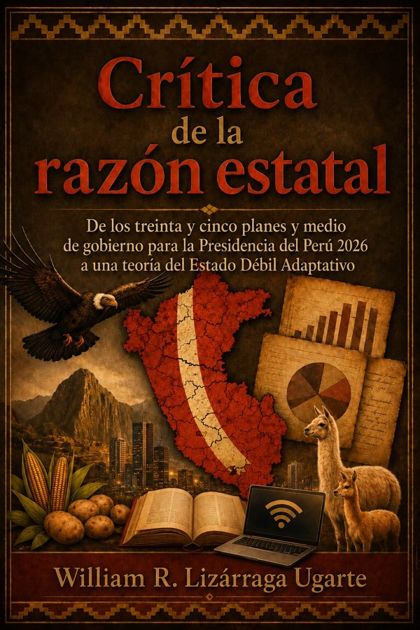
Crítica de la razón estatal
This book analyzes the thirty-five and a half government plans presented by the political organizations that participated in Peru's 2026 presidential election, examining them from formal, technical, and substantive perspectives to assess the State's capacity to understand, organize, and project itself over time.
Read more
This book analyzes the thirty-five and a half government plans presented by the political organizations that participated in Peru's 2026 presidential election, examining them from formal, technical, and substantive perspectives to assess the State's capacity to understand, organize, and project itself over time.
Without evaluating their feasibility or ideological orientation, the work identifies shortcomings and diagnoses shared by parties across the political spectrum and preliminarily introduces the category of the Adaptive Weak State (AWS): a State that has not failed, yet whose institutional fragility leads it to adapt to its own dysfunctions and coexist with informality, inefficiency, corruption, and social fragmentation. Written from an independent academic perspective, the book invites readers to reconsider the structure of the Peruvian State and envision a more integrated, dignified, and self-aware civilizational project.
Lima: Fondo Editorial Lizárraga Law Firm, PLLC, 2026.
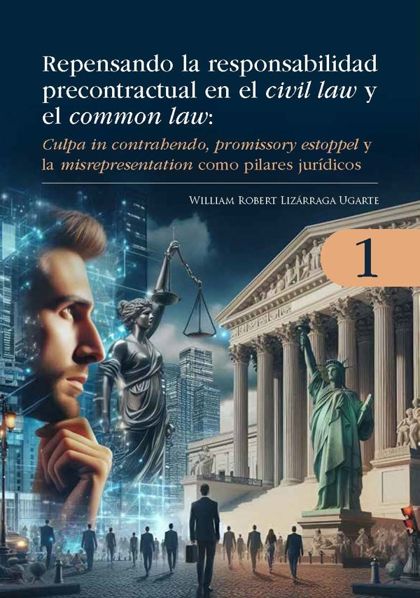
Rethinking Precontractual Liability in Common Law and Civil Law
Core analysis and comparative framework.
Read more
This book offers a detailed comparison between "culpa in contrahendo" and "promissory estoppel."
It examines the "culpa in contrahendo," a concept developed within Civil Law systems — especially in Germany, Italy, France, and Spain — together with "promissory estoppel," a figure from Common Law, paying particular attention to its operation in the U.S. legal system.
A key difference lies in the third type of "culpa in contrahendo," which requires proof of "bad faith" to claim damages — a condition absent in "promissory estoppel," which thus becomes a more effective and fairer instrument before the courts.
The second aspect of "culpa in contrahendo," related to consumer protection and the duty to inform buyers before concluding a contract, is comparable to "misrepresentation" in Common Law.
This topic was the subject of William R. Lizárraga Ugarte's doctoral research at the Universitat Autònoma de Barcelona, where he analyzed 1,000 Common Law cases and 500 Civil Law cases from Spain, Italy, Germany, and France.
Lima: Lizarraga Law Firm Editorial Fund, 2024.
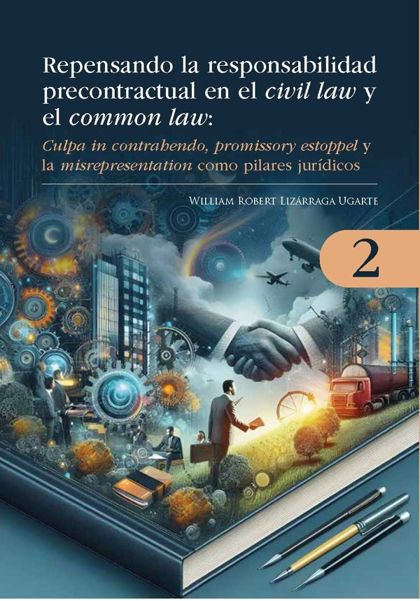
Rethinking Precontractual Liability in Common Law and Civil Law
Civil Law cases (Germany, Italy, Spain, France) analyzed from the perspective of Promissory Estoppel.
Read more
This book offers a detailed comparison between "culpa in contrahendo" and "promissory estoppel."
It examines the "culpa in contrahendo," a concept developed within Civil Law systems — especially in Germany, Italy, France, and Spain — together with "promissory estoppel," a figure from Common Law, paying particular attention to its operation in the U.S. legal system.
A key difference lies in the third type of "culpa in contrahendo," which requires proof of "bad faith" to claim damages — a condition absent in "promissory estoppel," which thus becomes a more effective and fairer instrument before the courts.
The second aspect of "culpa in contrahendo," related to consumer protection and the duty to inform buyers before concluding a contract, is comparable to "misrepresentation" in Common Law.
This topic was the subject of William R. Lizárraga Ugarte's doctoral research at the Universitat Autònoma de Barcelona, where he analyzed 1,000 Common Law cases and 500 Civil Law cases from Spain, Italy, Germany, and France.
Lima: Lizarraga Law Firm Editorial Fund, 2024.
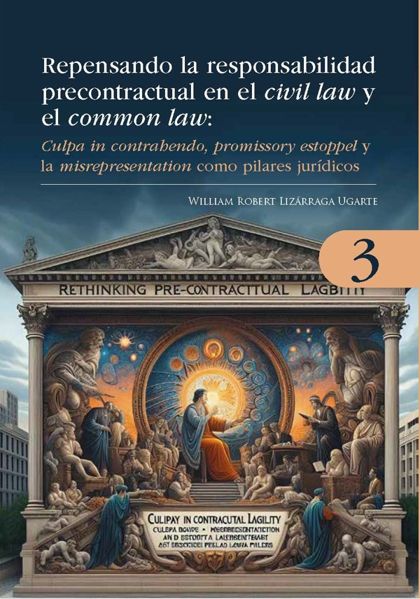
Rethinking Precontractual Liability in Common Law and Civil Law
Promissory Estoppel cases (mainly from Common Law systems) analyzed from the standpoint of Culpa in Contrahendo.
Read more
This book offers a detailed comparison between "culpa in contrahendo" and "promissory estoppel."
It examines the "culpa in contrahendo," a concept developed within Civil Law systems — especially in Germany, Italy, France, and Spain — together with "promissory estoppel," a figure from Common Law, paying particular attention to its operation in the U.S. legal system.
A key difference lies in the third type of "culpa in contrahendo," which requires proof of "bad faith" to claim damages — a condition absent in "promissory estoppel," which thus becomes a more effective and fairer instrument before the courts.
The second aspect of "culpa in contrahendo," related to consumer protection and the duty to inform buyers before concluding a contract, is comparable to "misrepresentation" in Common Law.
This topic was the subject of William R. Lizárraga Ugarte's doctoral research at the Universitat Autònoma de Barcelona, where he analyzed 1,000 Common Law cases and 500 Civil Law cases from Spain, Italy, Germany, and France.
Lima: Lizarraga Law Firm Editorial Fund, 2024.
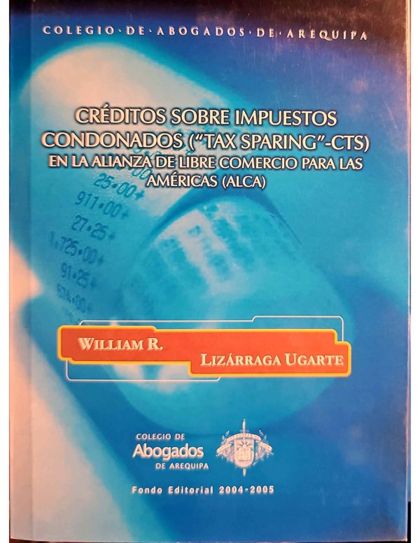
Tax Sparing Credits (CTS) in the Free Trade Area of the Americas
This book addresses one of the most complex and debated topics in International Tax Law: "tax sparing credits".
Read more
This book addresses one of the most complex and debated topics in International Tax Law: "tax sparing credits". With a rigorous academic approach, William R. Lizárraga Ugarte examines the relevance of tax sparing within the framework of the Free Trade Area of the Americas (FTAA), analyzing its impact on foreign direct investment, fiscal incentives, and the negotiation between developed and developing countries.
The book presents an in-depth study based on the author's Master's thesis in Tax Law at the University of Florida, translated into Spanish by the author himself. Using a "trialist" method that integrates norms, behaviors, and values, he offers a comparative study of U.S., Canadian, European, and Asian policies, highlighting the inconsistencies of U.S. policy compared to more flexible international positions.
Beyond its technical rigor, the work serves as a reflection tool for lawyers, economists, academics, and policymakers interested in the intersection between globalization, taxation, and economic development in Latin America and the Caribbean.
Arequipa, Peru: Editorial Fund of the Arequipa Bar Association, 2005.
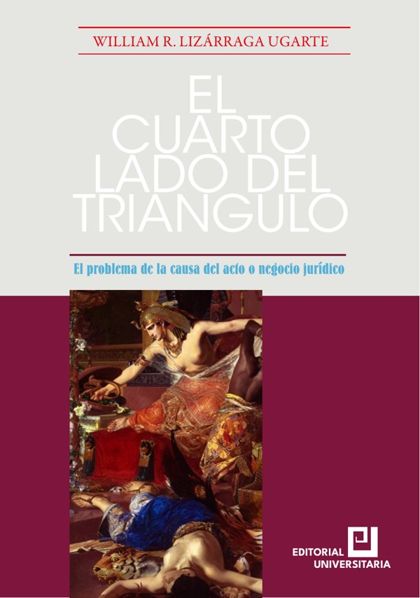
El Cuarto Lado del Triángulo
This book critically examines the usefulness of causa in Civil Law and consideration in Common Law as foundational elements of contract formation.
Read more
This book critically examines the usefulness of causa in Civil Law and consideration in Common Law as foundational elements of contract formation. Drawing on the evolution of causa from Domat, Pothier, and the Napoleonic Code of 1804, as well as the treatment of consideration in the Restatement of Contracts, the book demonstrates how both doctrines have lost relevance in light of contemporary socio-legal realities and the development of concepts such as promissory estoppel. The author argues that contractual structure rests essentially on consent, form, and subject matter, in line with modern legal approaches that dispense with both causa and consideration.
Because of its breadth and comparative perspective, this book is essential reading for those who study contracts from the viewpoints of both Civil Law and Common Law.
Arequipa-Perú: Universidad Nacional de San Agustín, 2000.
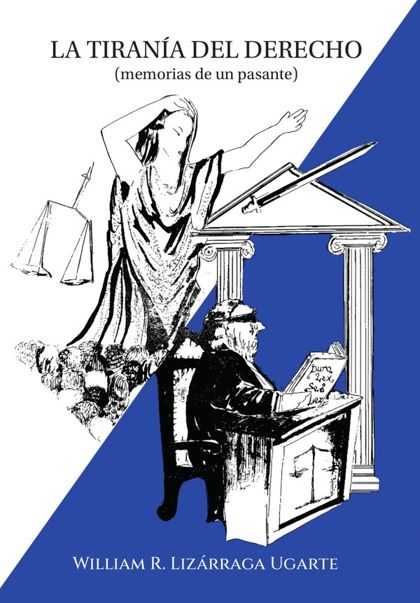
La Tiranía del Derecho
Written thirty years ago by a young law student, this book challenges a legal system confined to rigid written rules and proposes a humanist vision in which law is guided by justice and justice by the supreme value of life.
Read more
Written thirty years ago by a young law student, this book challenges a legal system confined to rigid written rules and proposes a humanist vision in which law is guided by justice and justice by the supreme value of life. Drawing on Ortega y Gasset and Einstein, as well as the author's early experience drafting judicial decisions, the work explores the tension between strict legalism and the pursuit of equitable outcomes without violating the law. Its enduring message extends beyond the legal profession: meaningful change begins with individuals whose actions are grounded in values, justice, and respect for human life.
Arequipa, Perú: Universidad Nacional de San Agustín, 1996.

El Éxito y Tú
Originally published in 1993, this book invites readers to understand success beyond material wealth—as a purposeful life guided by discipline, ethical principles, and service to the common good.
Read more
Originally published in 1993, this book invites readers to understand success beyond material wealth—as a purposeful life guided by discipline, ethical principles, and service to the common good. Through the story of a young man who dreams of receiving a letter from Success itself, the work brings together insights from existentialist, Buddhist, Christian, and metaphysical philosophy, drawing inspiration from Khalil Gibran's The Prophet, the Bhagavad Gita, and Kant's categorical imperative. Having accompanied thousands of readers, it remains a practical and spiritual compass for achieving personal goals, contributing positively to society, and living with purpose and fulfillment.
Arequipa, Perú: San Agustín University Press, 1993.
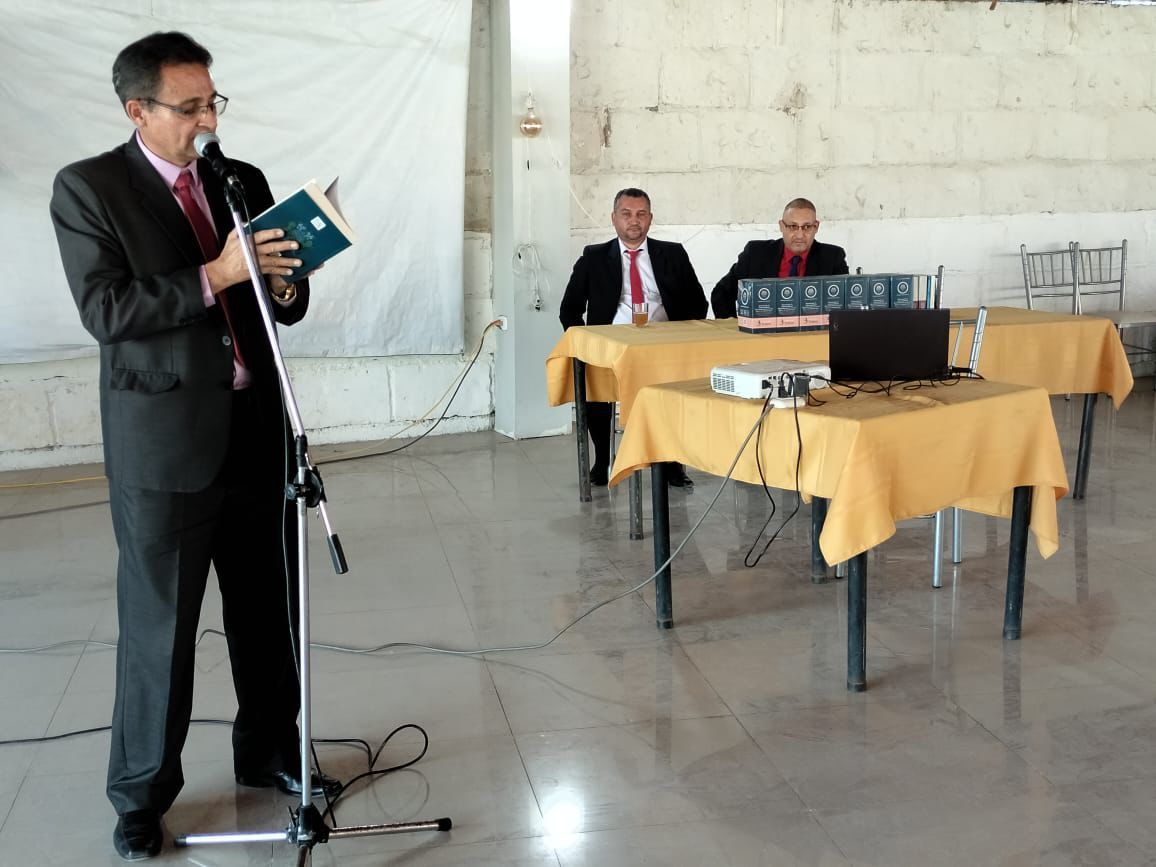
Book presentation
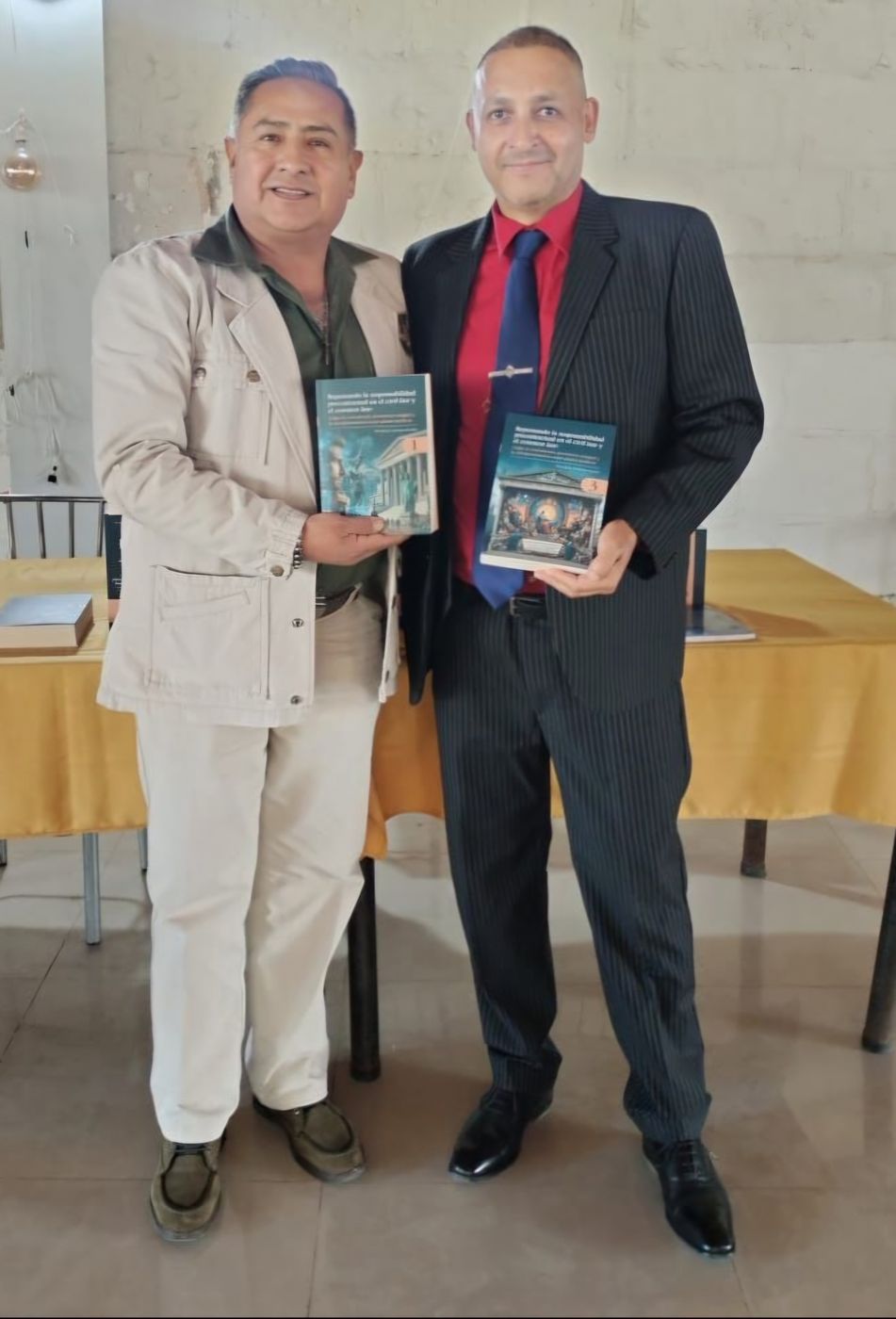
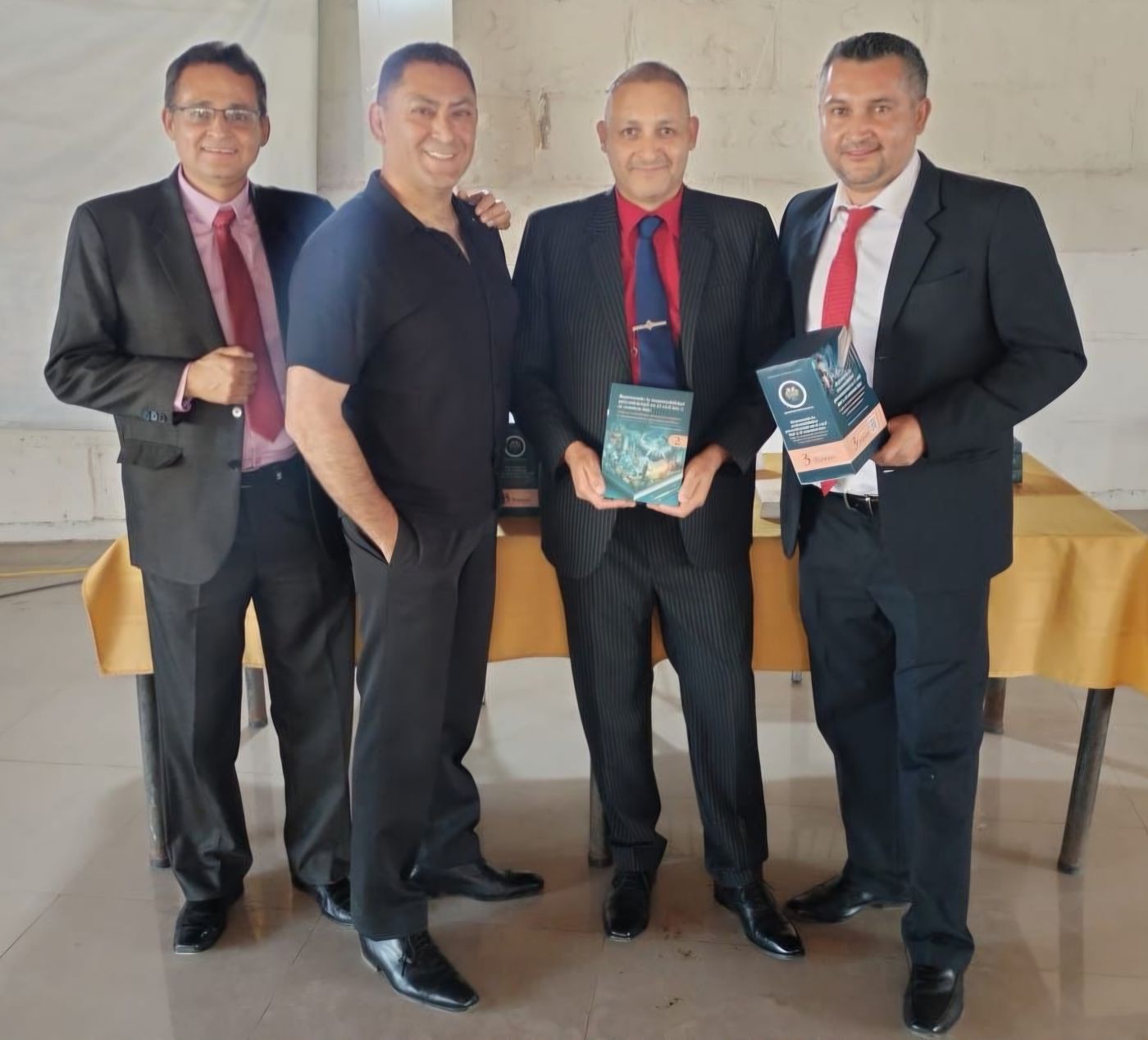
In September 2024, William R. Lizárraga presented his work Rethinking Precontractual Liability in Common Law and Civil Law (3 volumes) before colleagues, guests, family and friends, and shared copies of the book with the attendees.
Photos of the book presentation






Acknowledgements
Letters of acknowledgement received from universities, libraries, institutions and distinguished jurists for his books. Each letter shows the book it refers to. Click on a letter to read it in full.
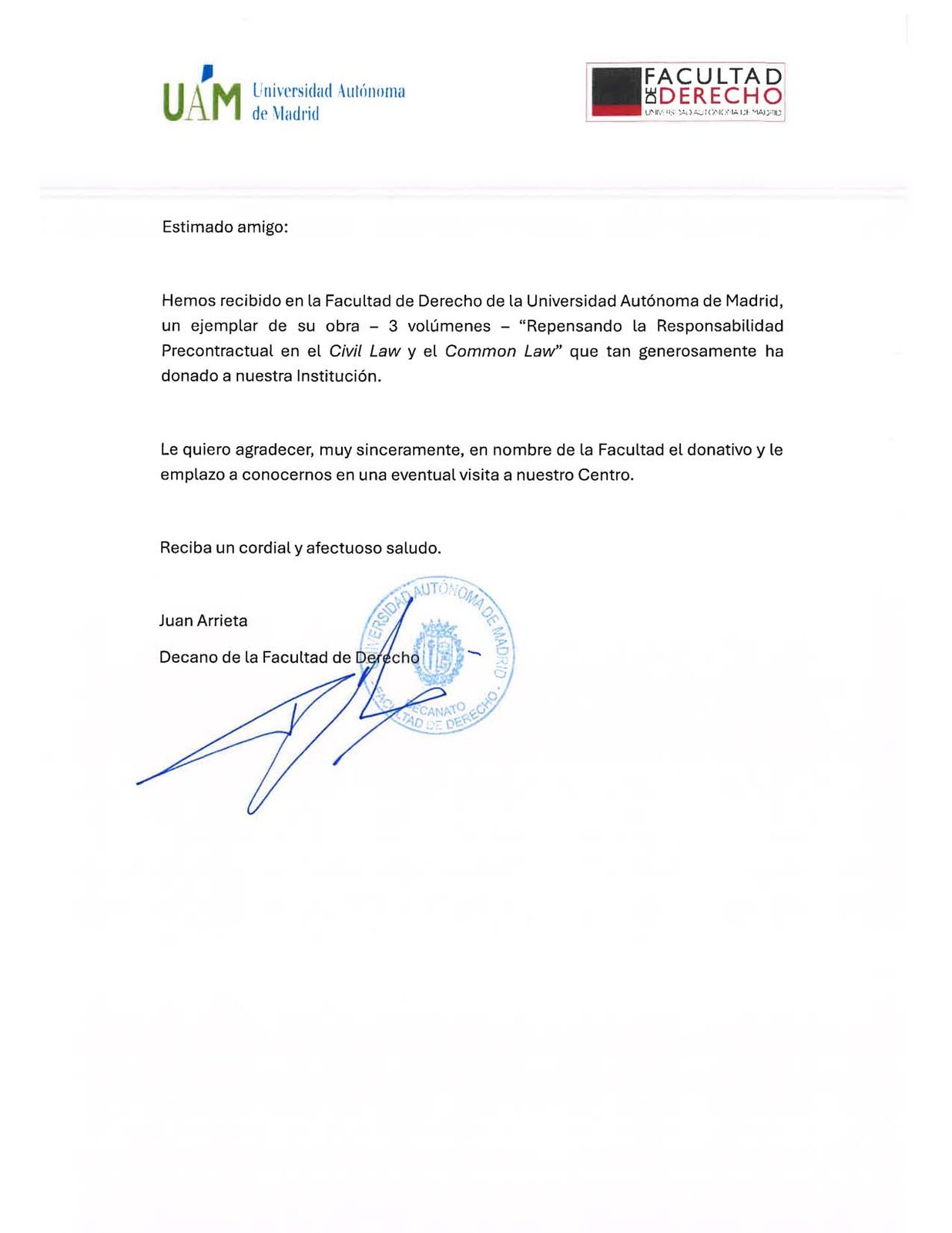 Universidad Autónoma de MadridRethinking Precontractual Liability
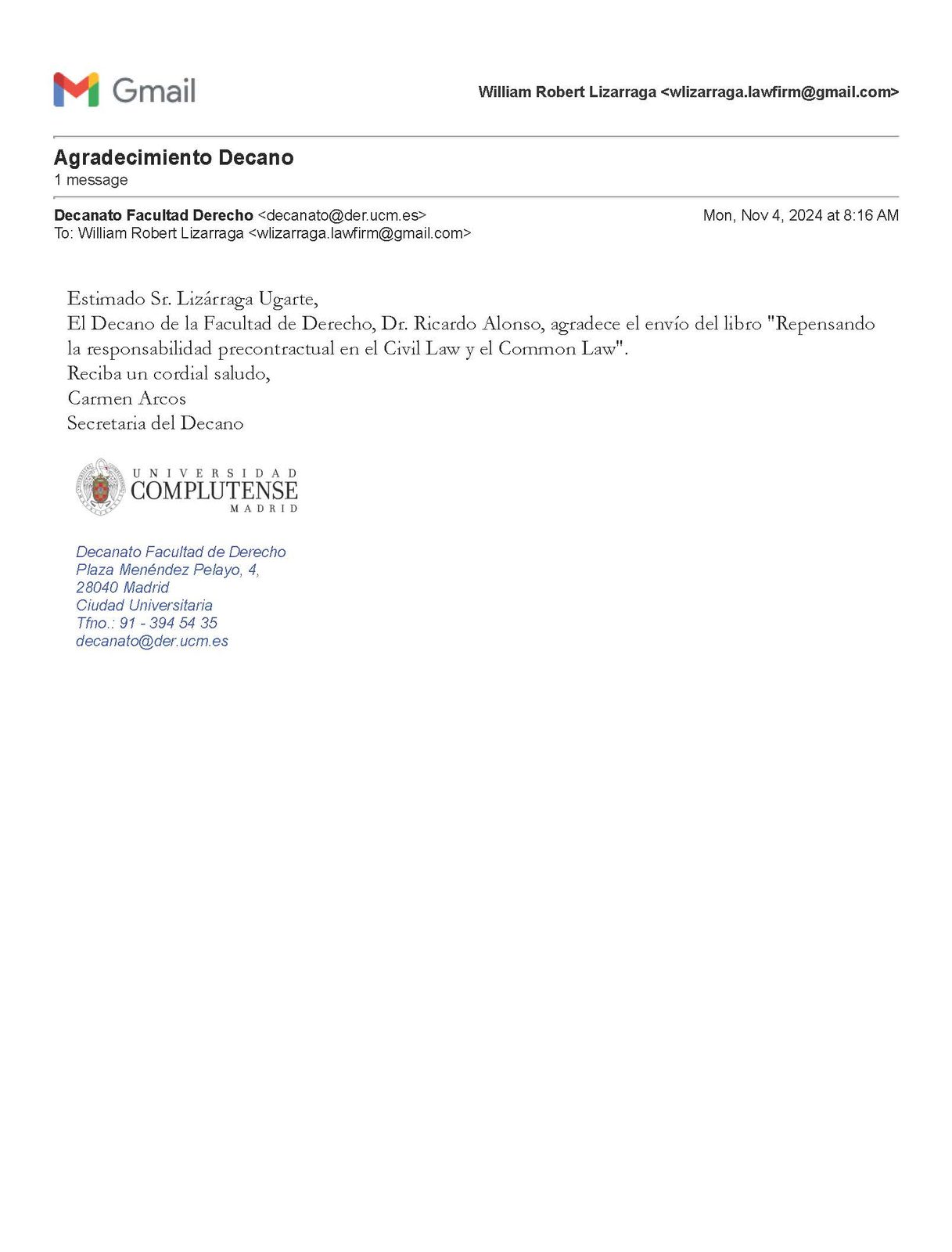 Universidad Complutense de Madrid — Dean of the Faculty of LawRethinking Precontractual Liability
 Universitat Autònoma de Barcelona (p. 1)Rethinking Precontractual Liability
 Universitat Autònoma de Barcelona (p. 2)Rethinking Precontractual Liability
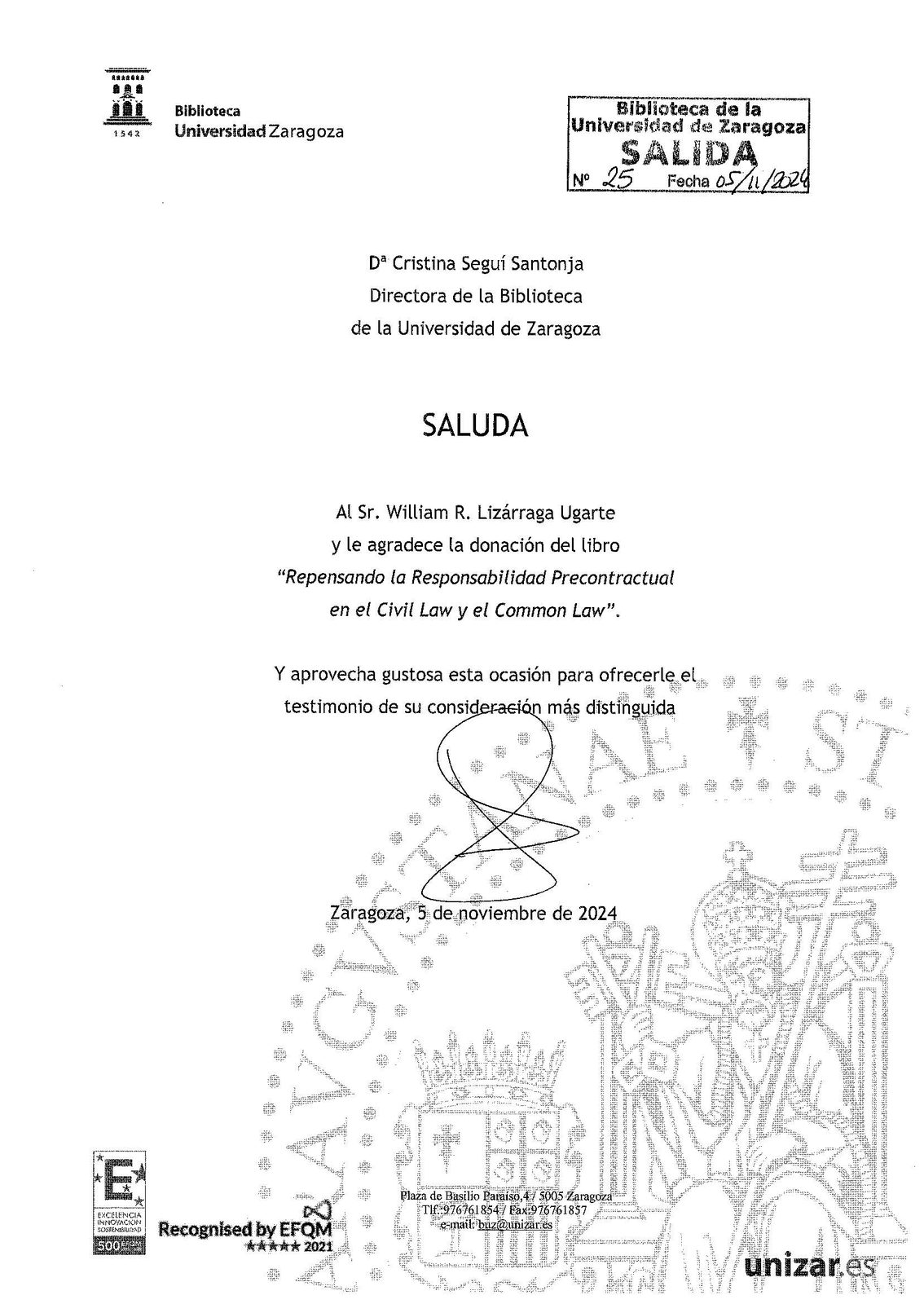 Universidad de Zaragoza — LibraryRethinking Precontractual Liability
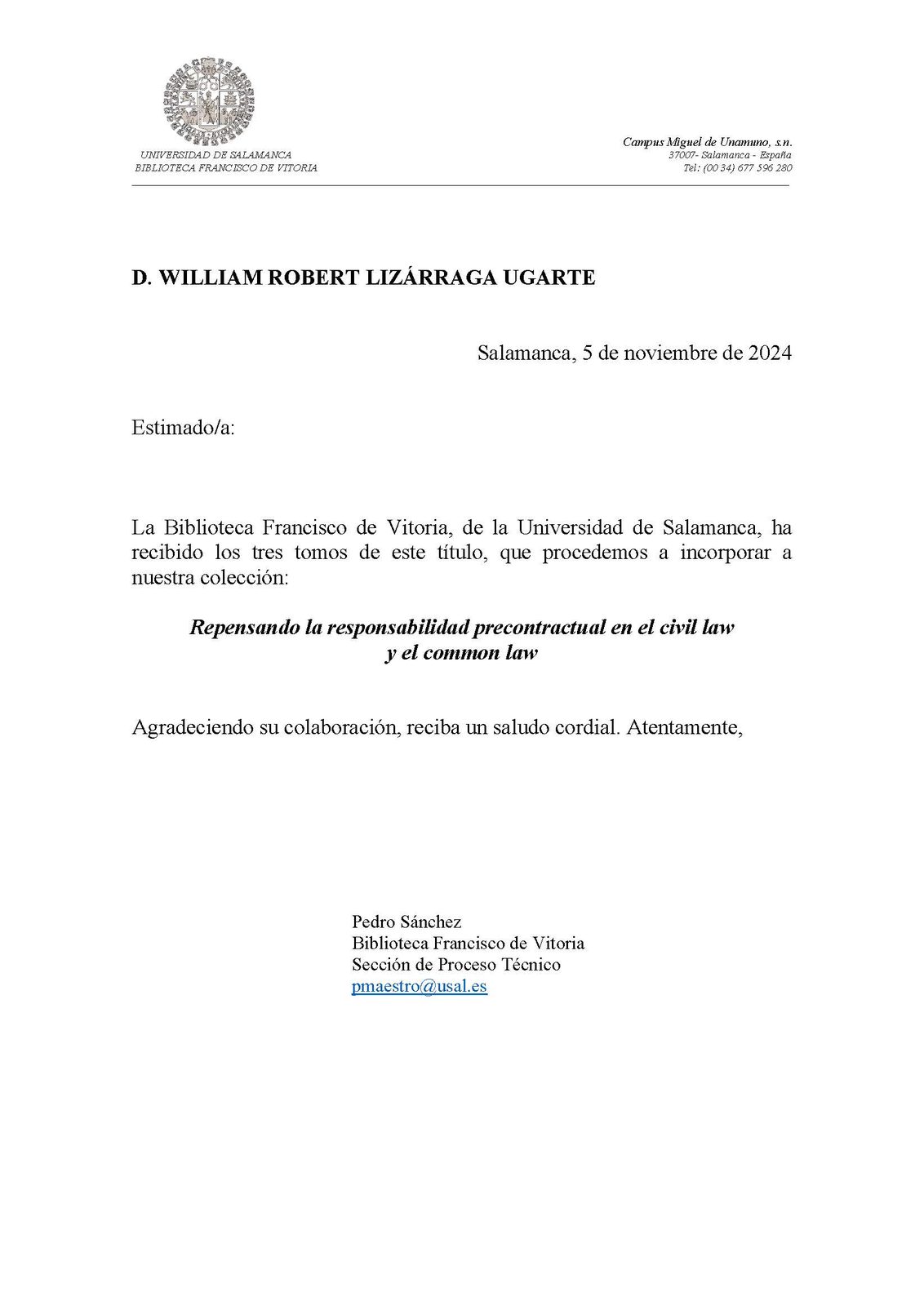 Universidad de Salamanca — Biblioteca Francisco de VitoriaRethinking Precontractual Liability
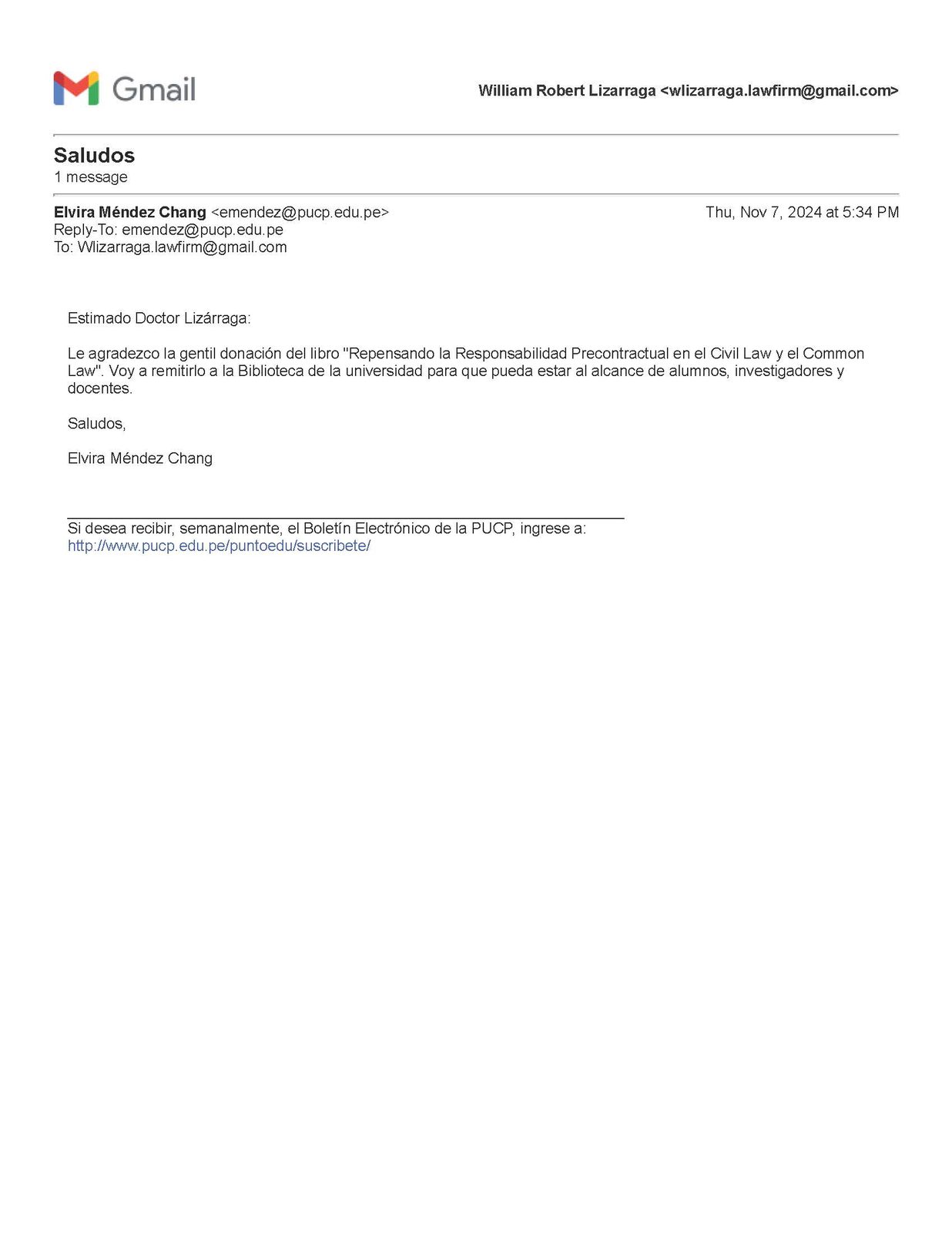 Dr. Elvira Méndez Chang (PUCP)Rethinking Precontractual Liability
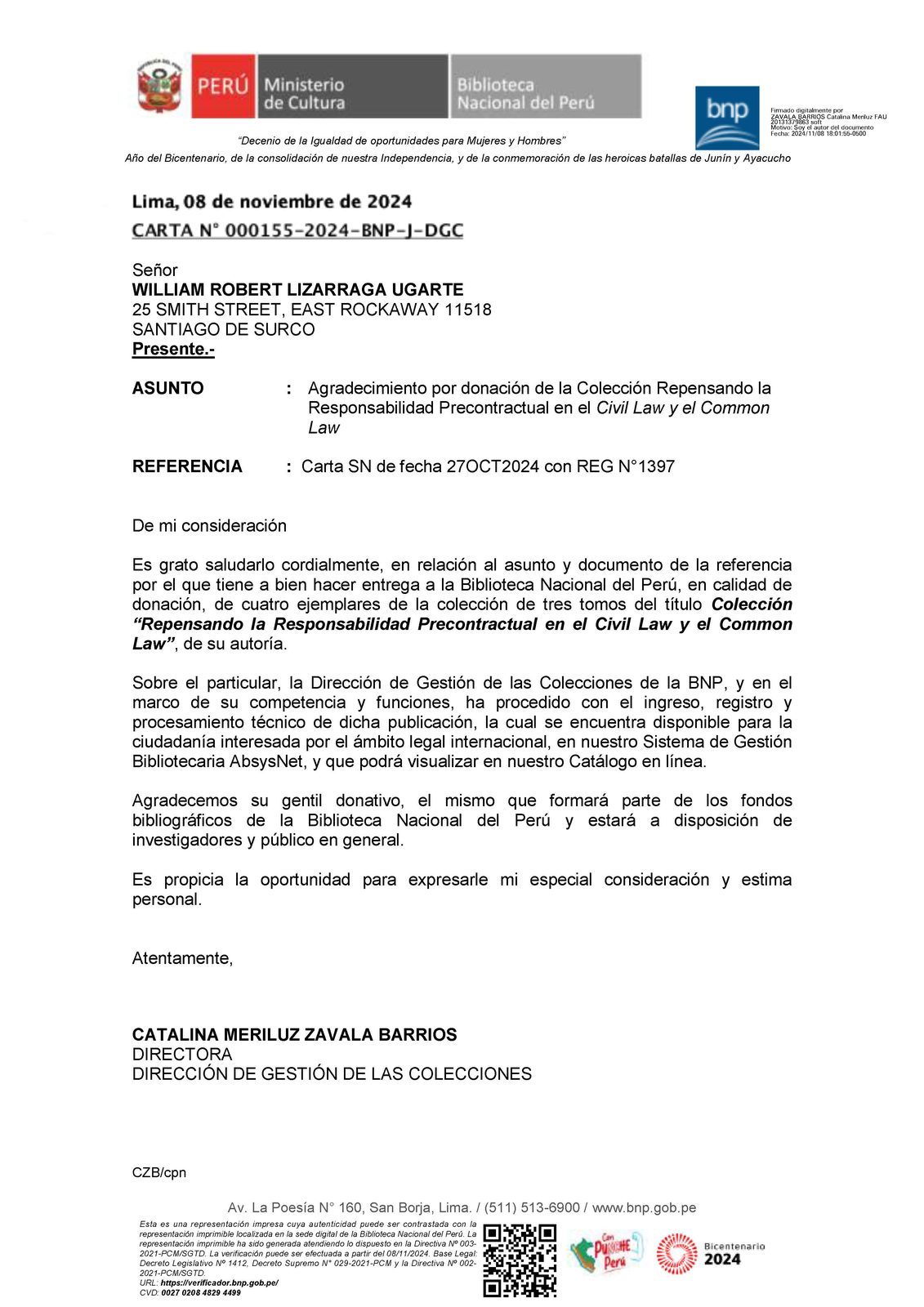 Biblioteca Nacional del PerúRethinking Precontractual Liability
 Dr. César LandaRethinking Precontractual Liability
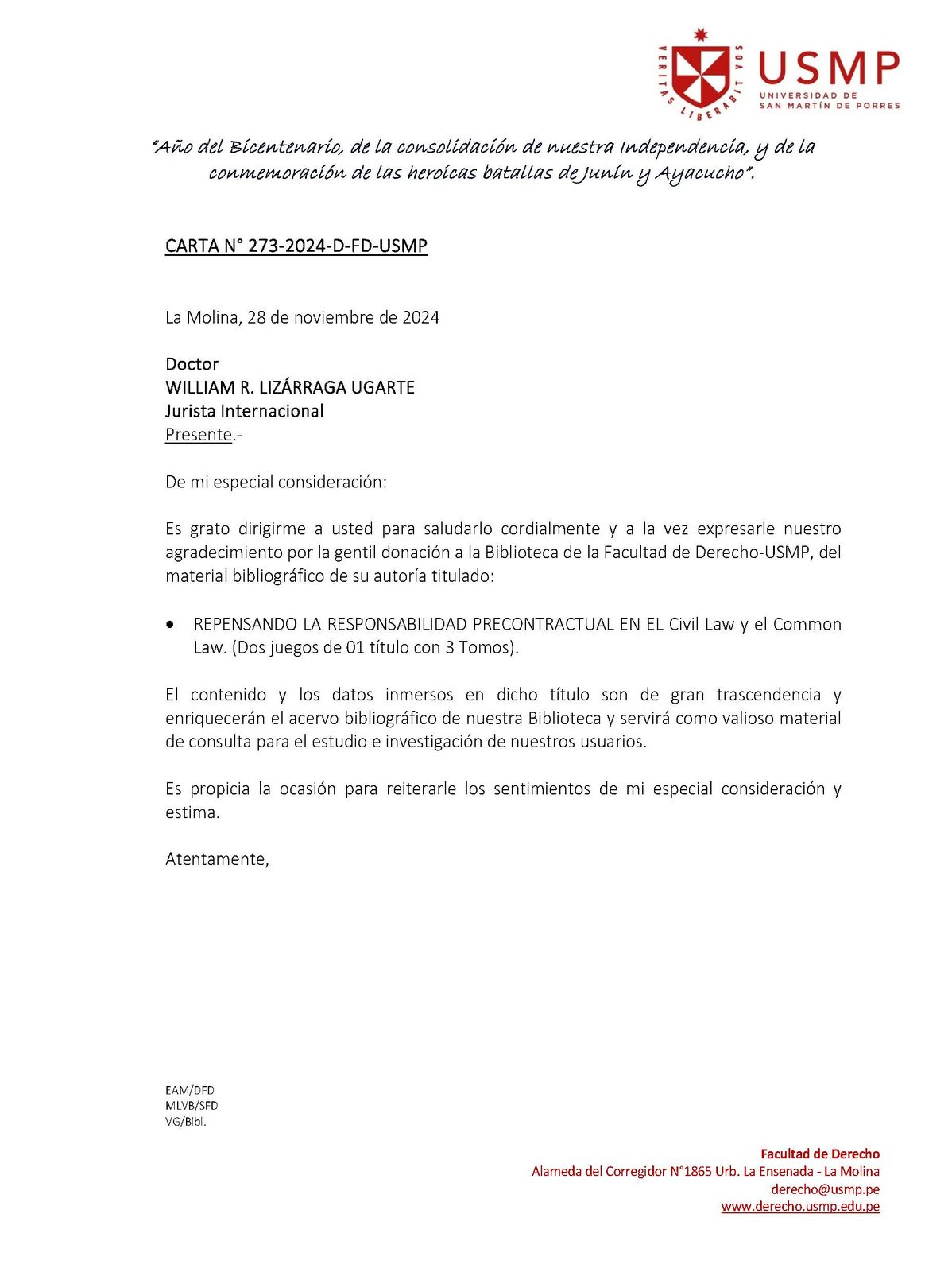 Universidad de San Martín de PorresRethinking Precontractual Liability
 Universidad de San Martín de PorresRethinking Precontractual Liability
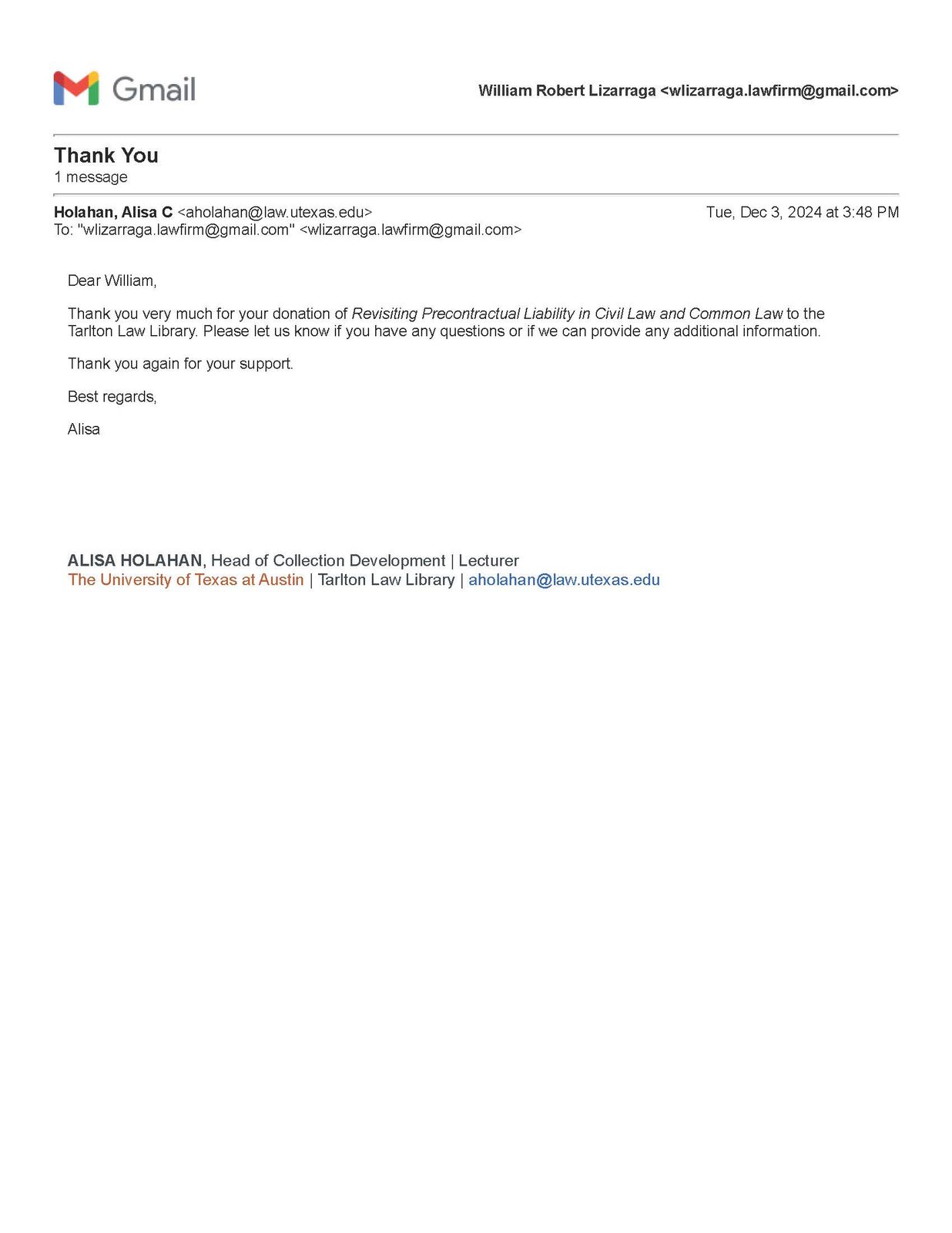 The University of TexasRethinking Precontractual Liability
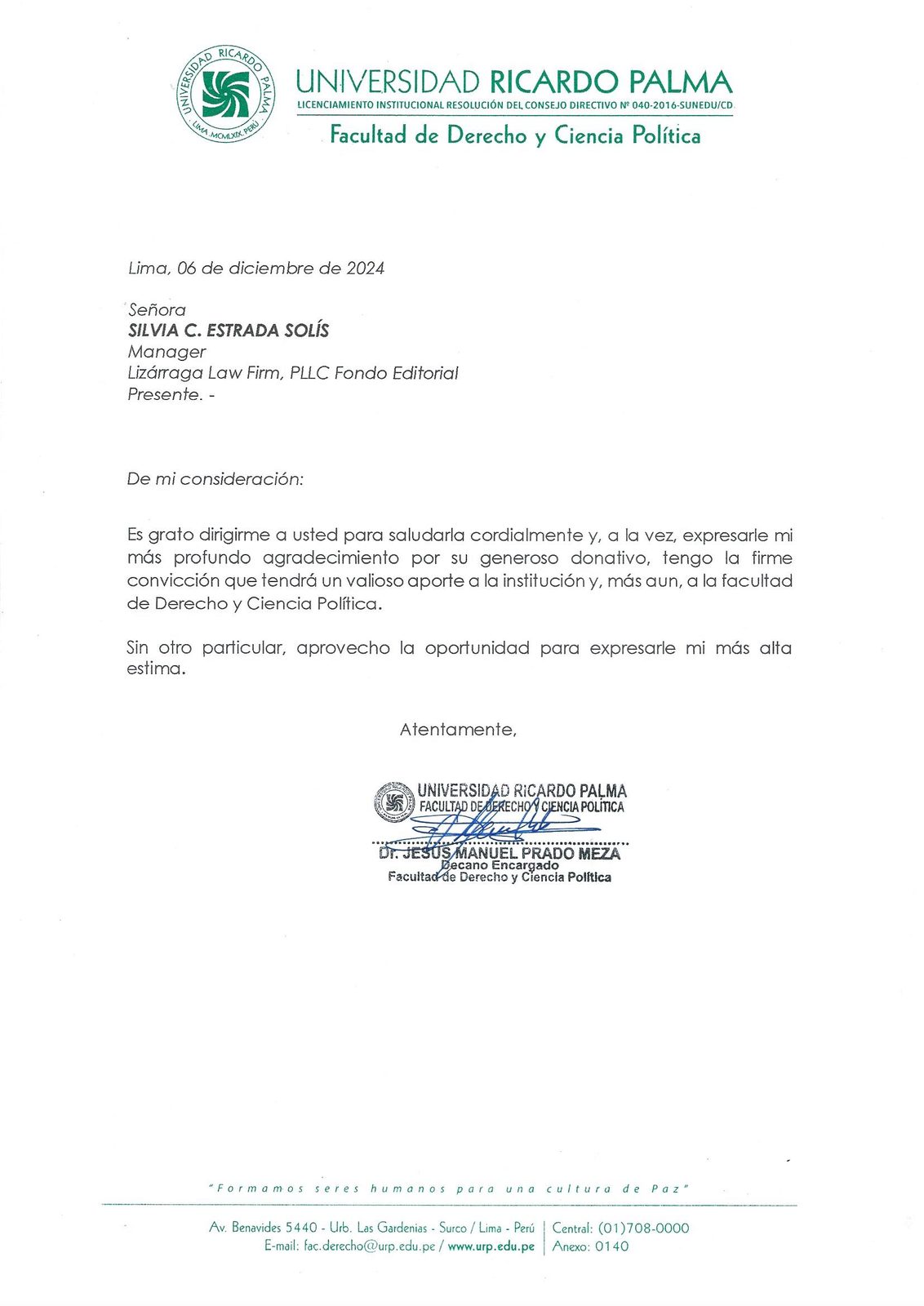 Universidad Ricardo PalmaRethinking Precontractual Liability
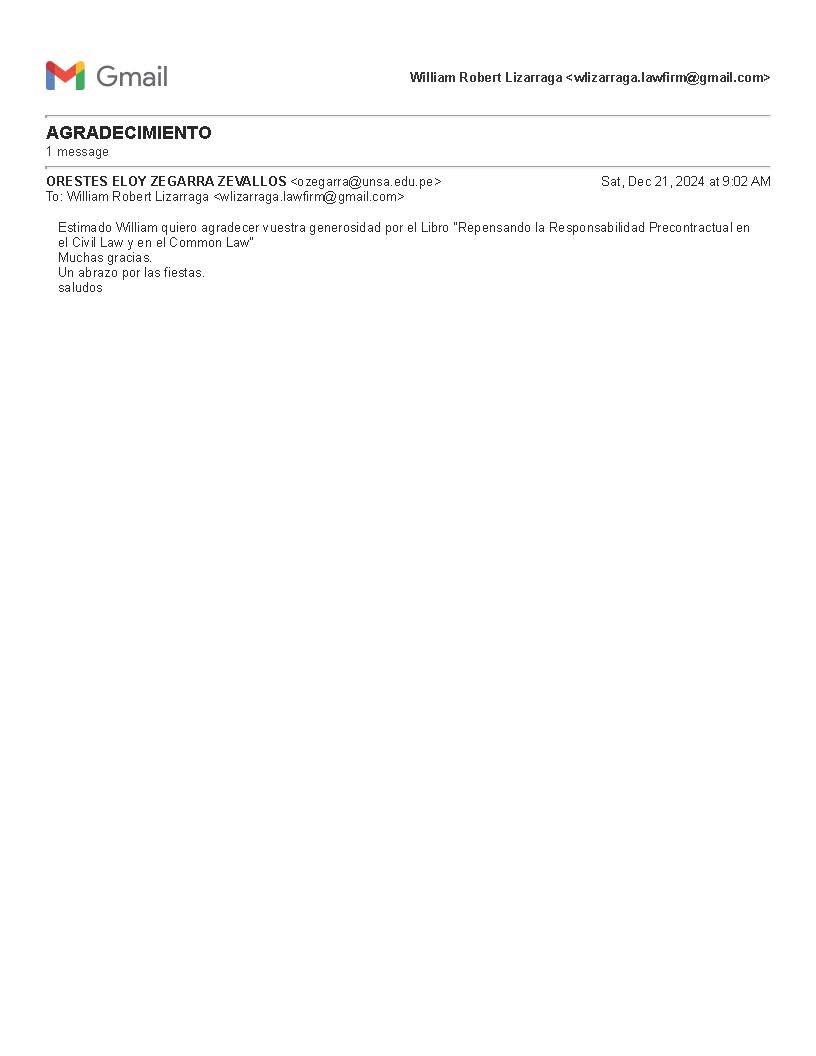 Dr. Orestes Zegarra, former President of the Superior Court of Justice of ArequipaRethinking Precontractual Liability
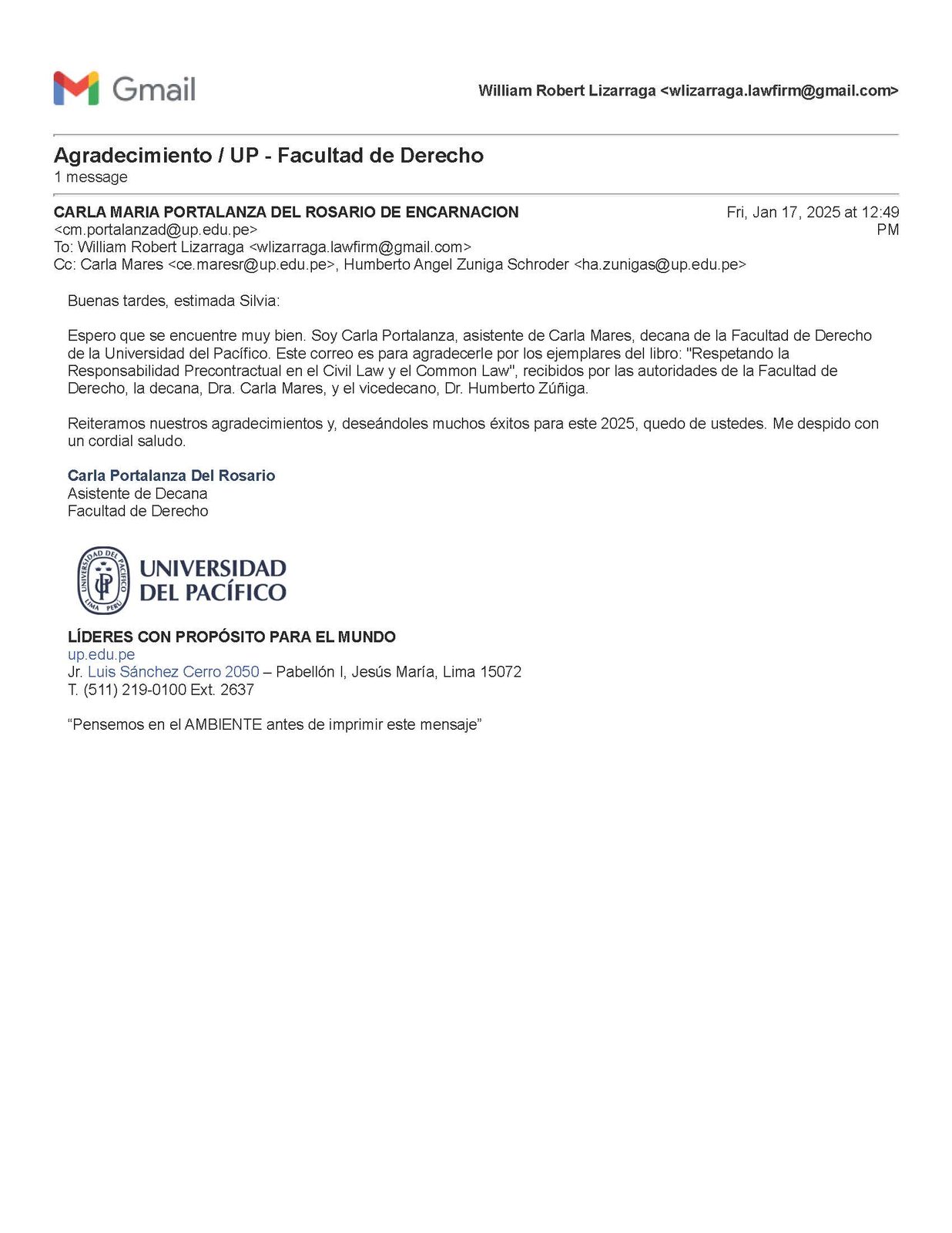 Universidad del Pacífico — Dean’s OfficeRethinking Precontractual Liability
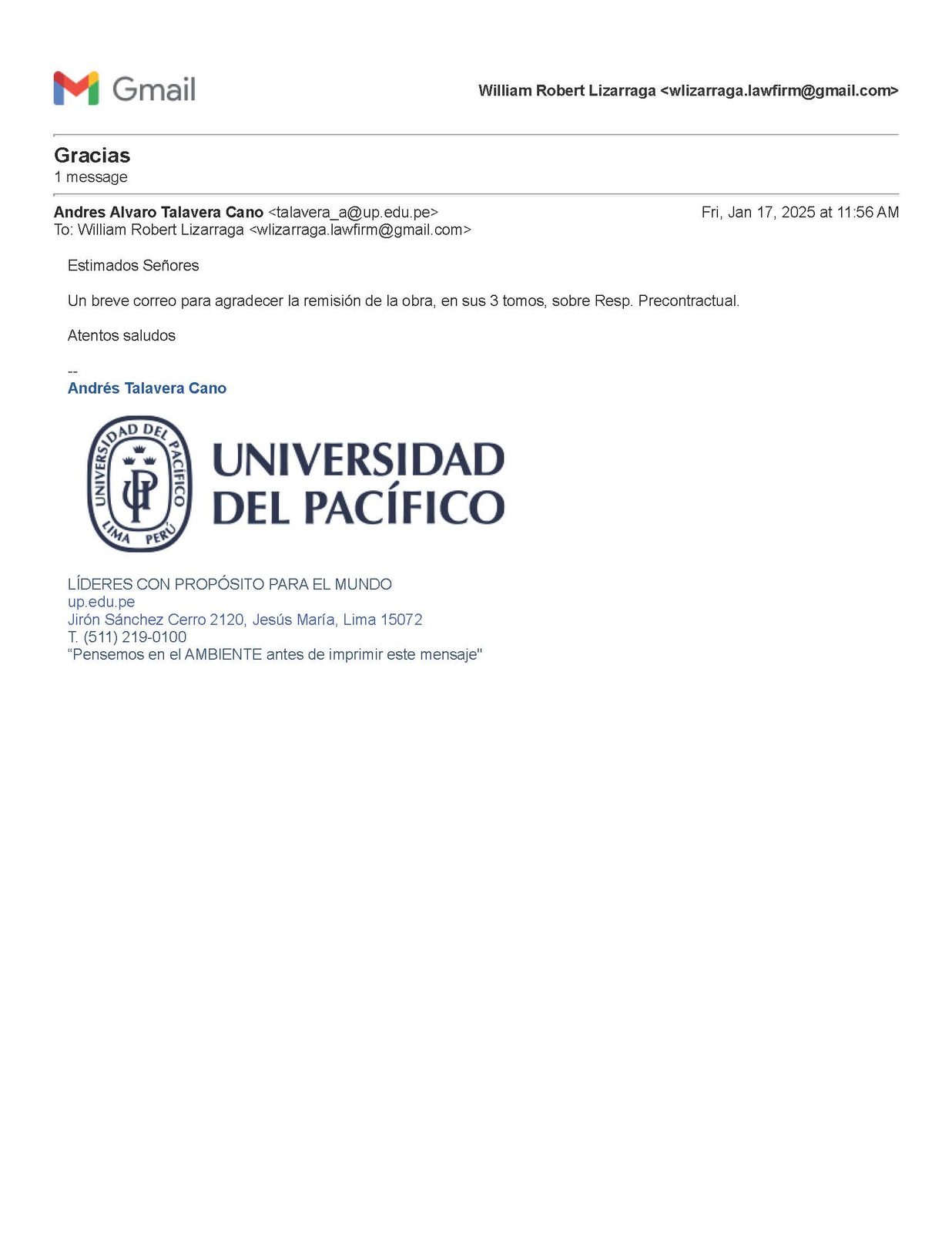 Universidad del PacíficoRethinking Precontractual Liability
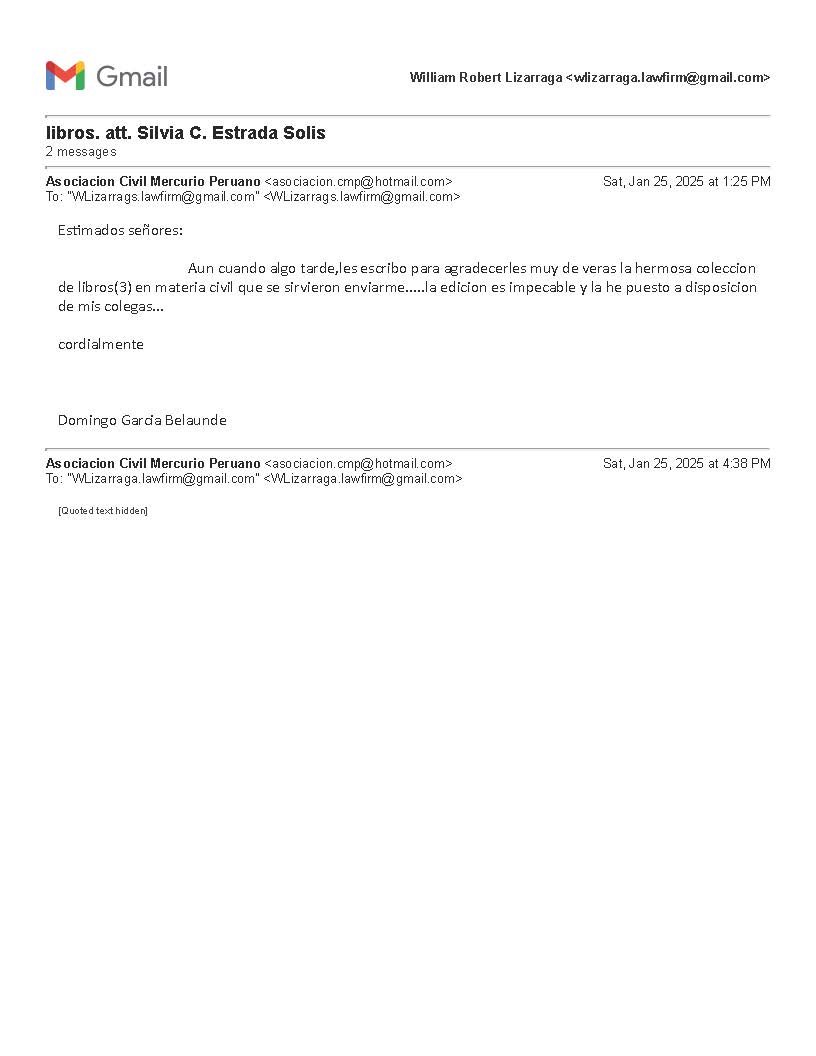 Dr. Domingo García BelaundeRethinking Precontractual Liability
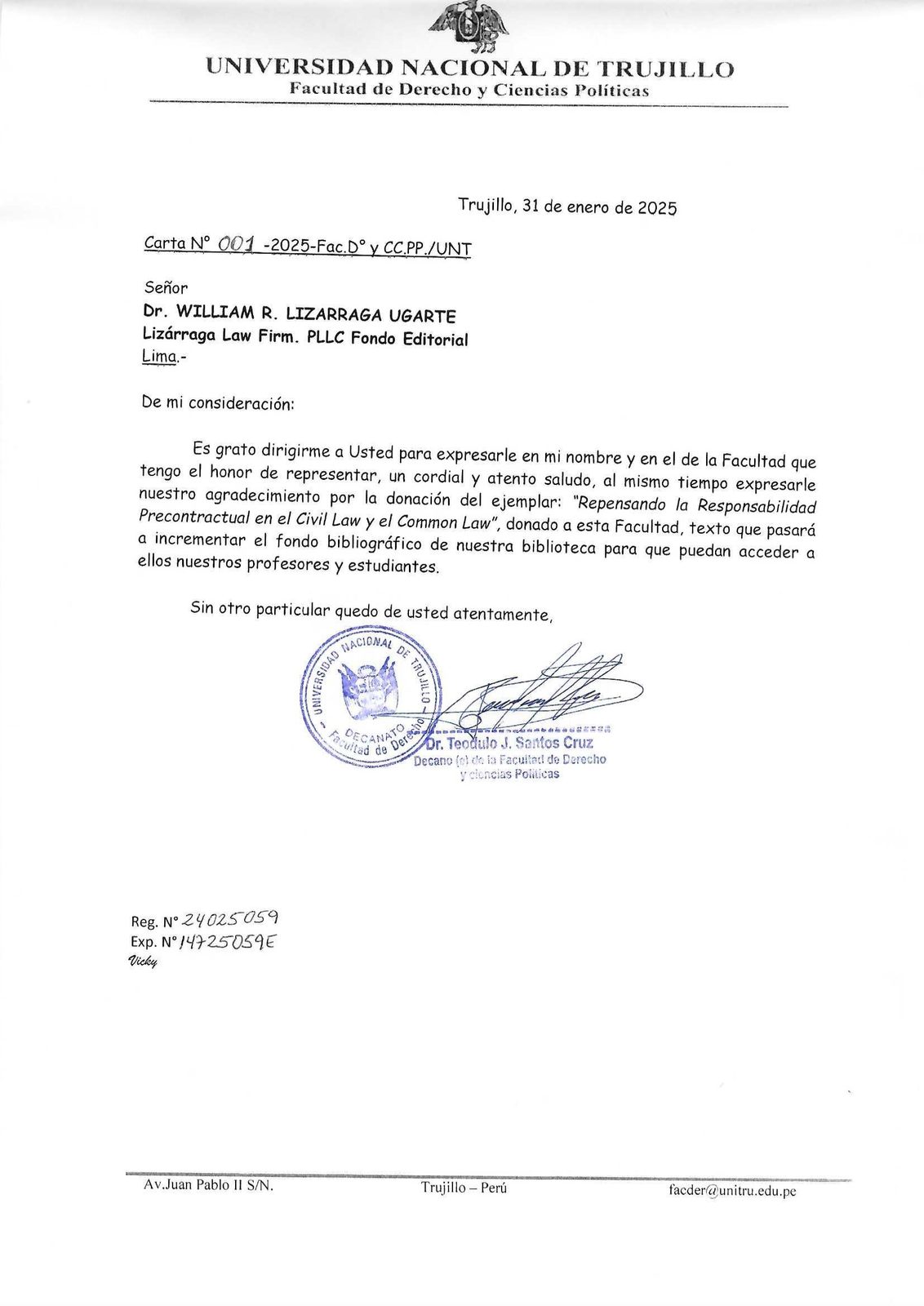 Universidad Nacional de TrujilloRethinking Precontractual Liability
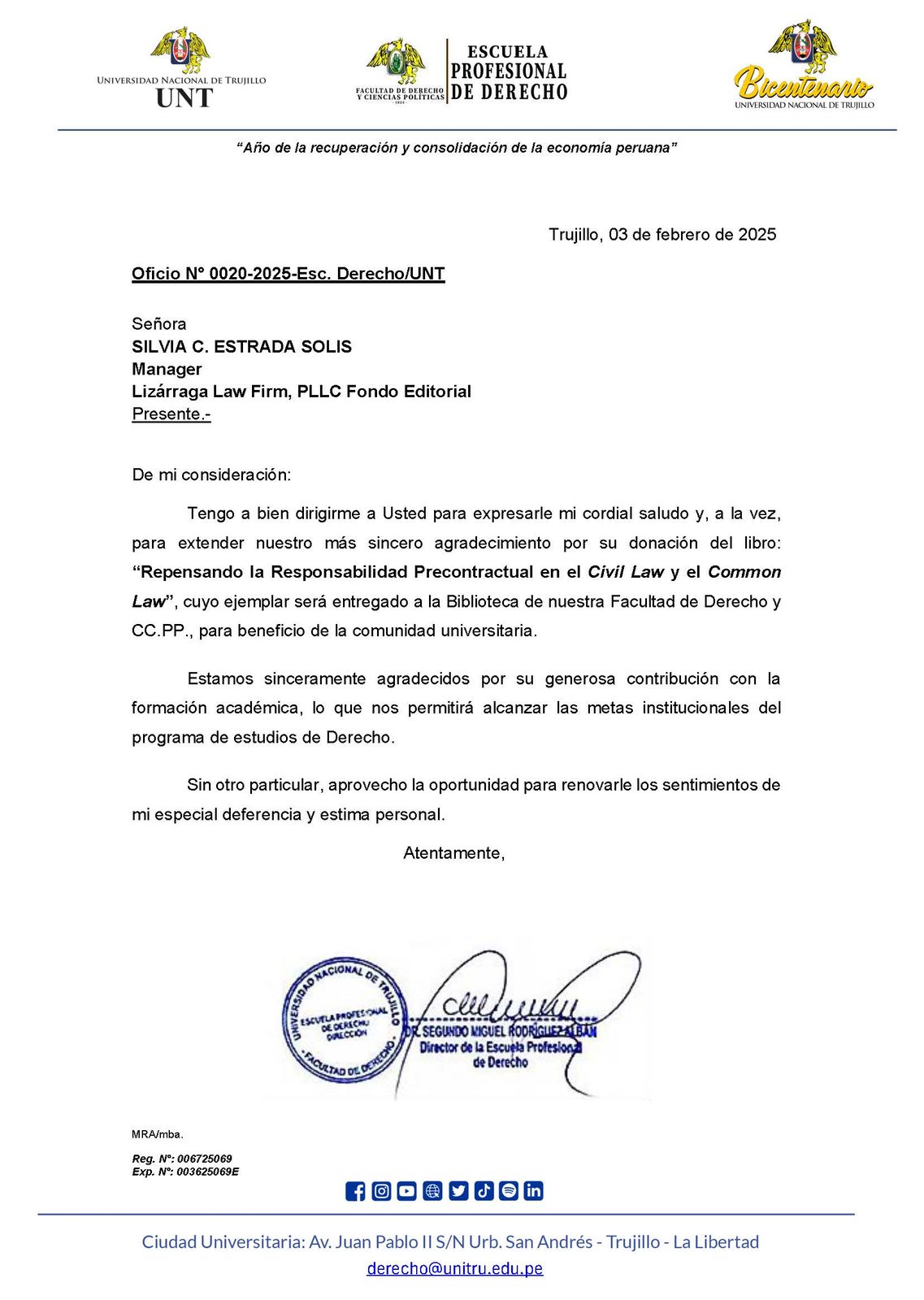 Universidad Nacional de Trujillo — Dean’s OfficeRethinking Precontractual Liability
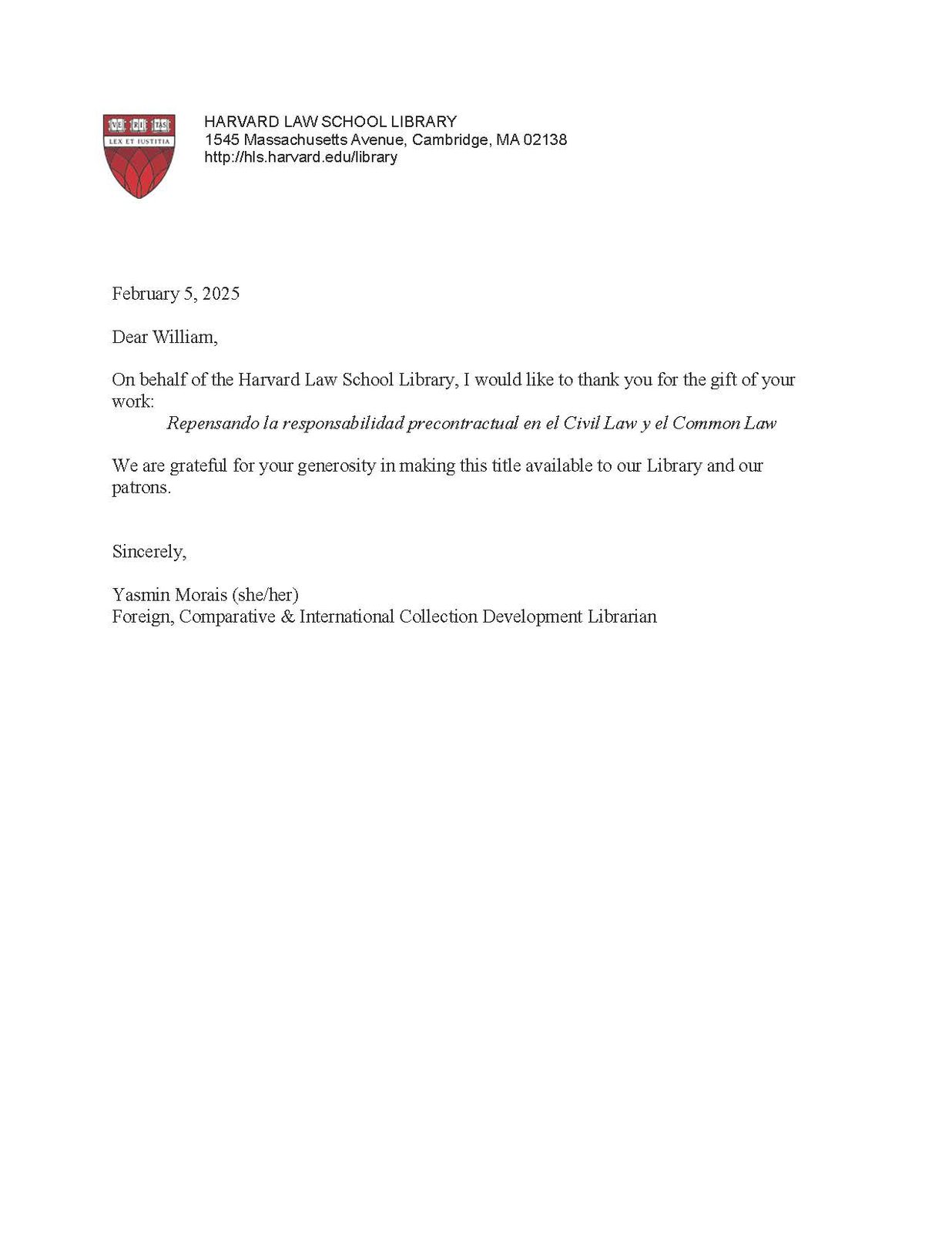 Harvard UniversityRethinking Precontractual Liability
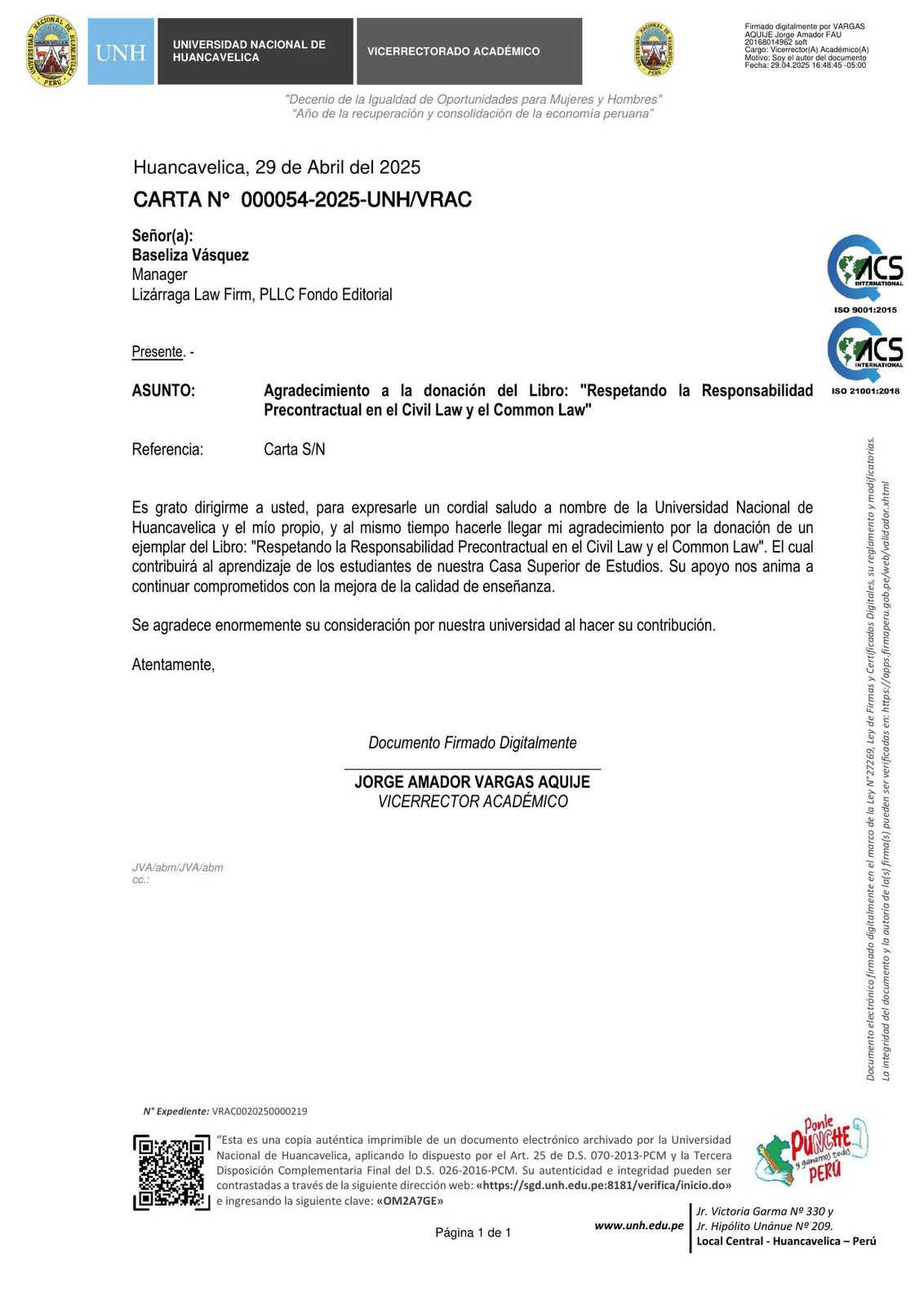 Universidad Nacional de Huancavelica — Vice-RectorRethinking Precontractual Liability
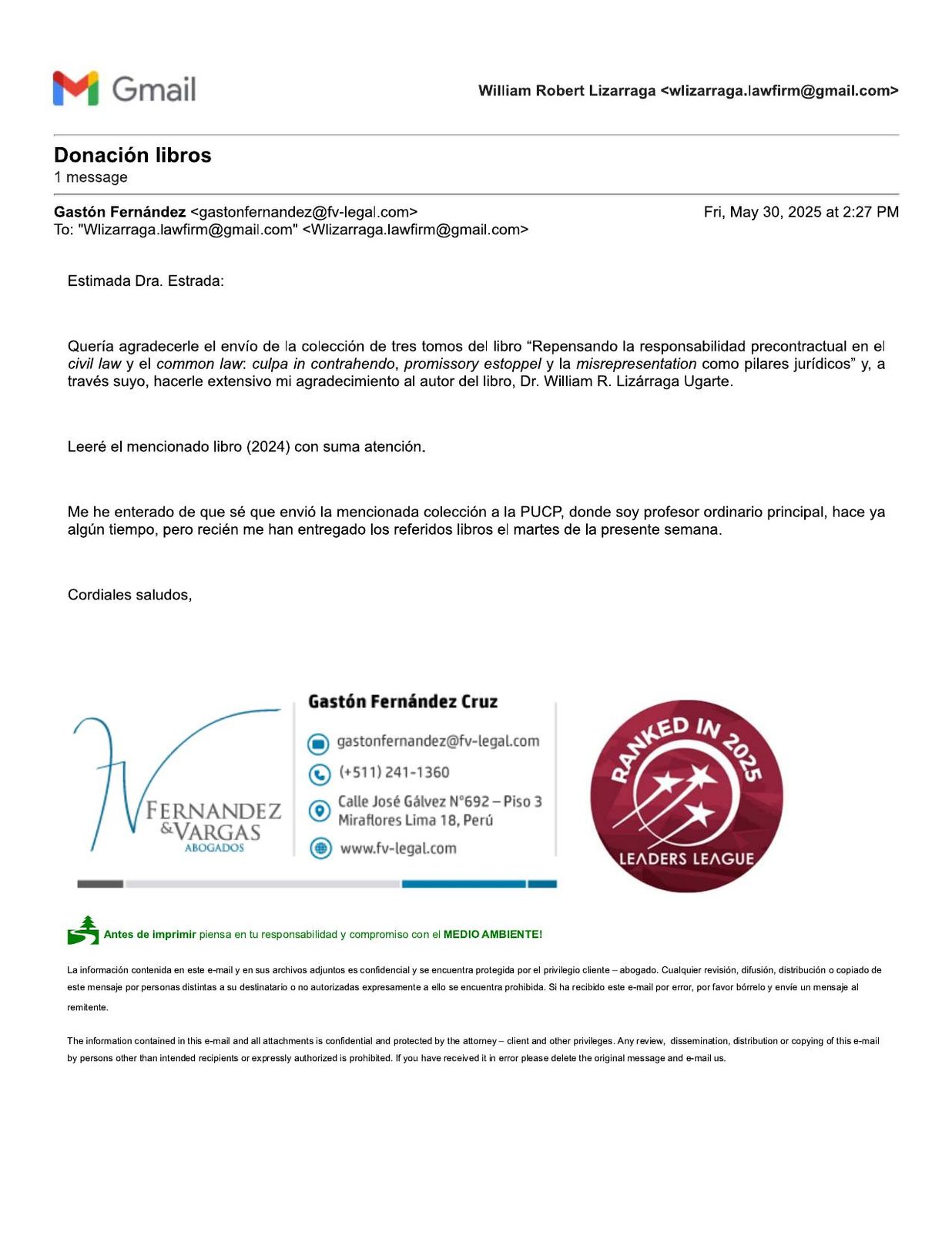 Dr. Gastón Fernández Cruz (PUCP)Rethinking Precontractual Liability
 Dr. Raúl Chanamé OrbeRethinking Precontractual Liability
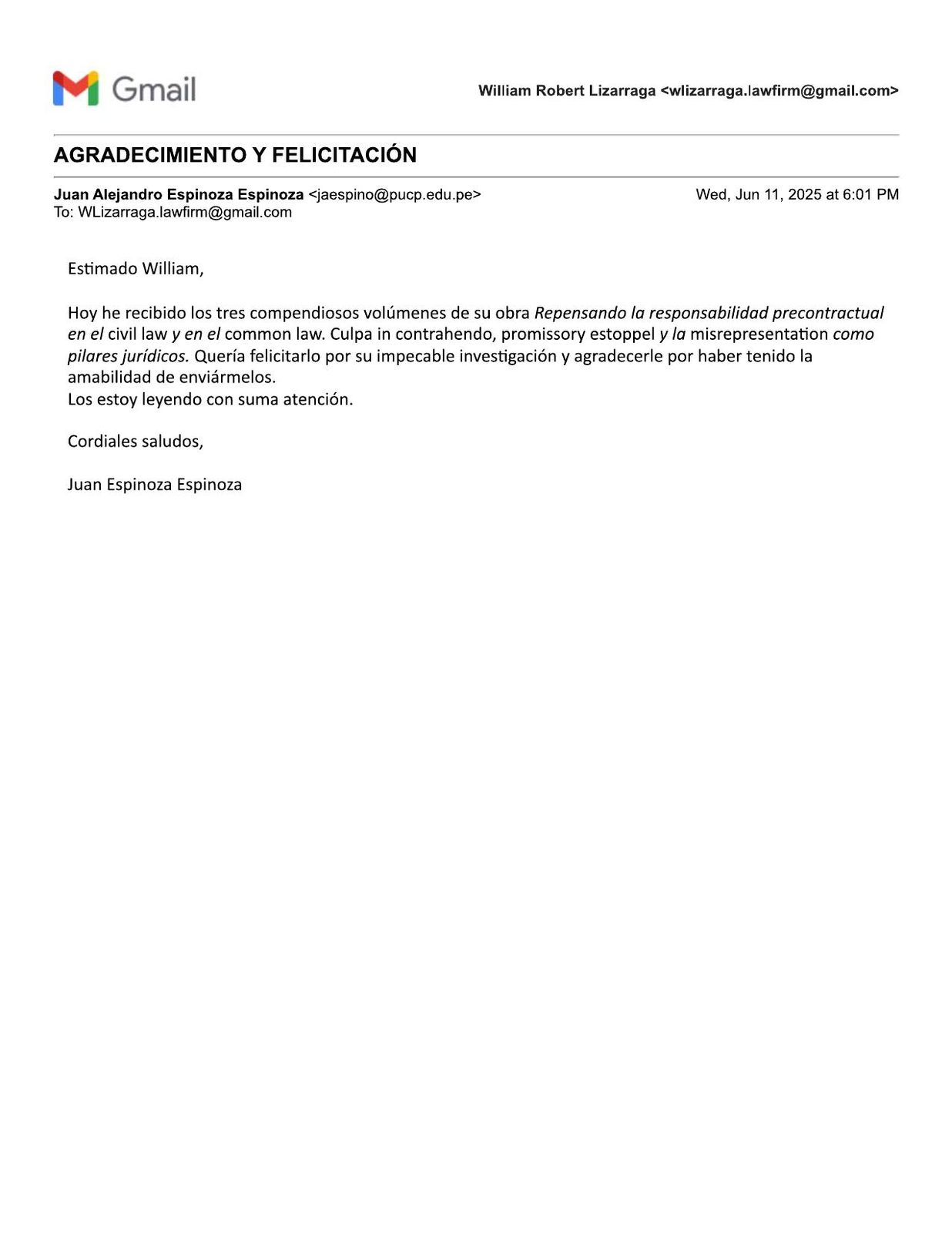 Dr. Juan Espinoza Espinoza (PUCP)Rethinking Precontractual Liability
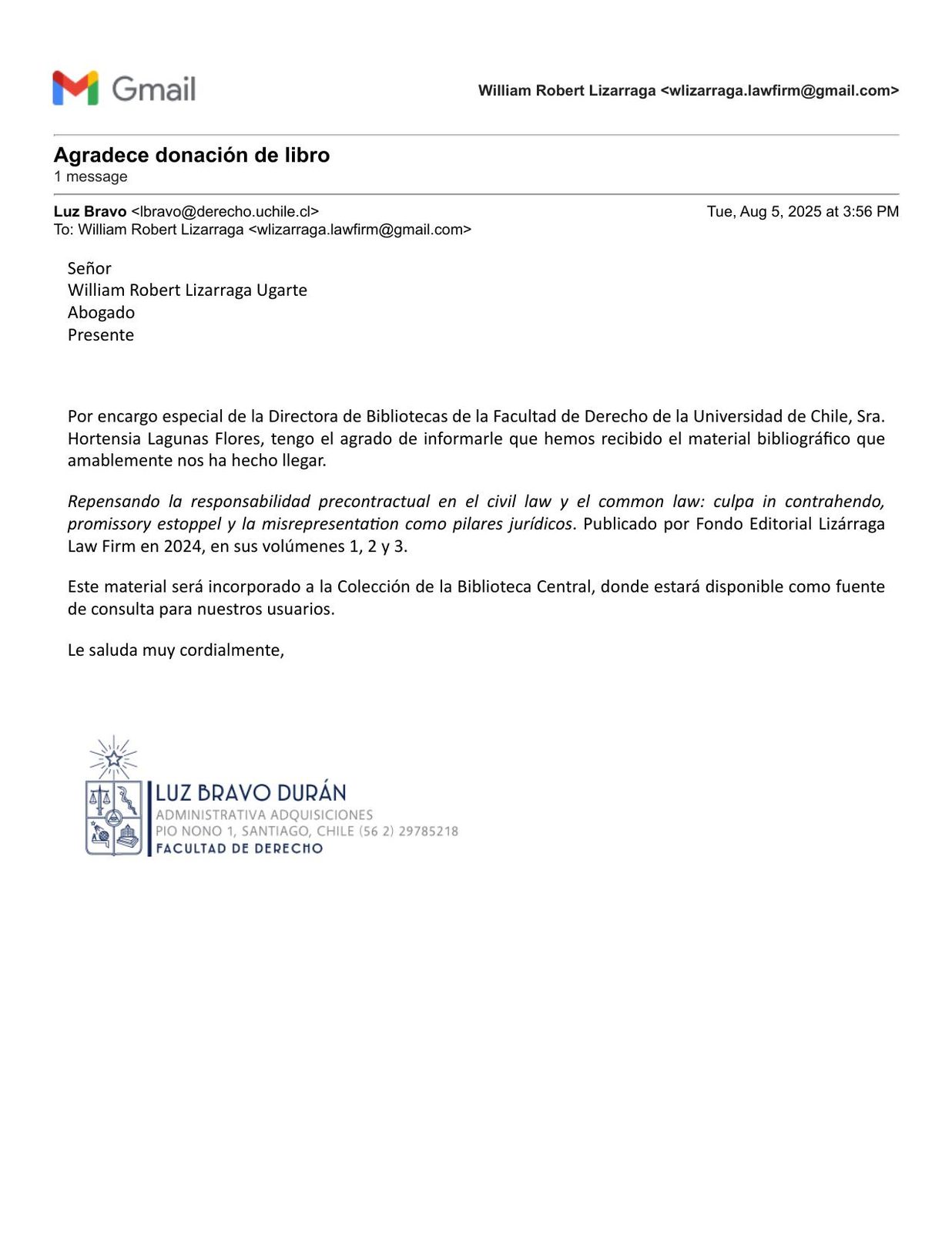 Universidad de ChileRethinking Precontractual Liability
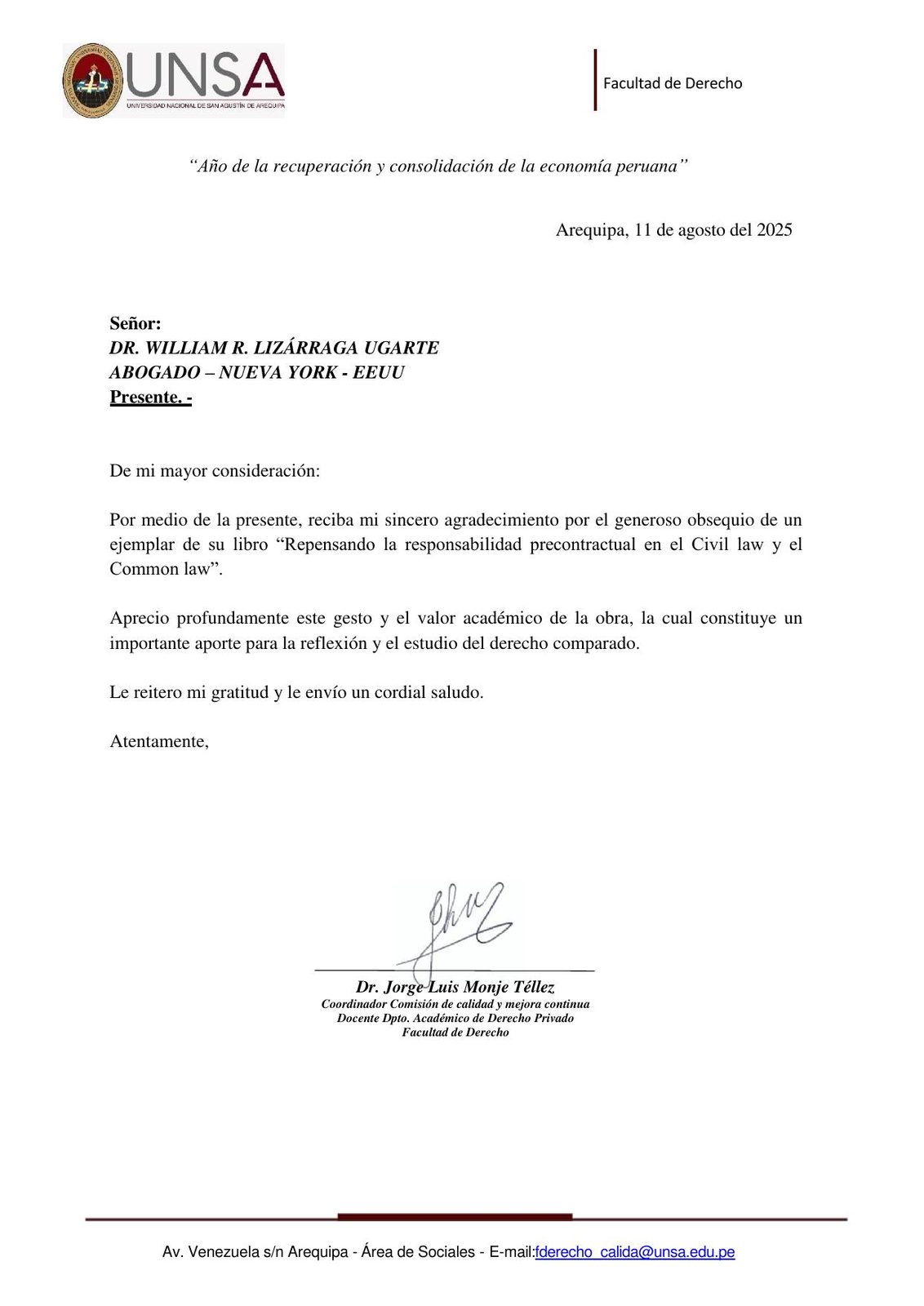 Universidad Nacional de San Agustín — Faculty of LawRethinking Precontractual Liability
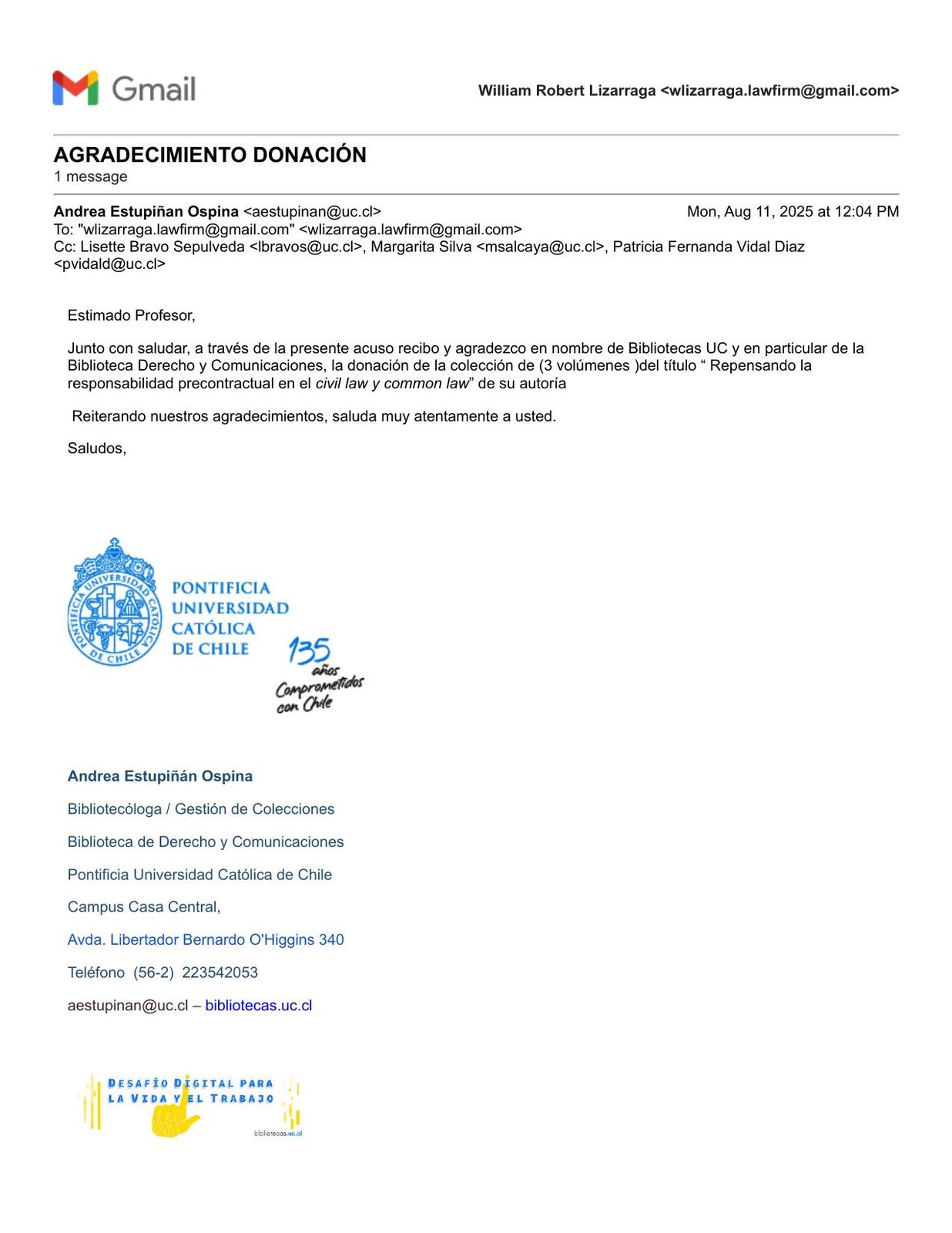 Pontificia Universidad Católica de ChileRethinking Precontractual Liability
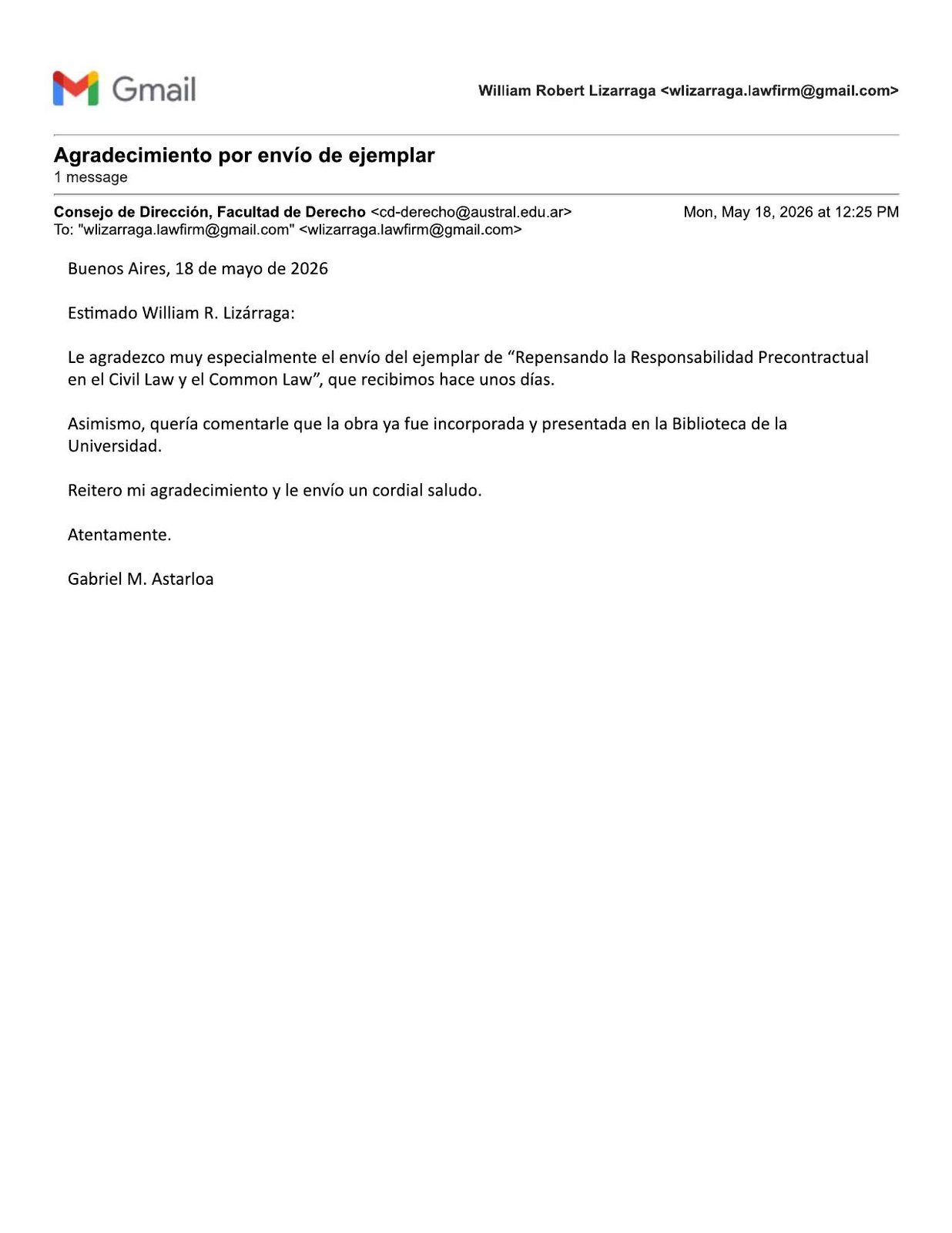 Universidad Austral (Argentina)Rethinking Precontractual Liability
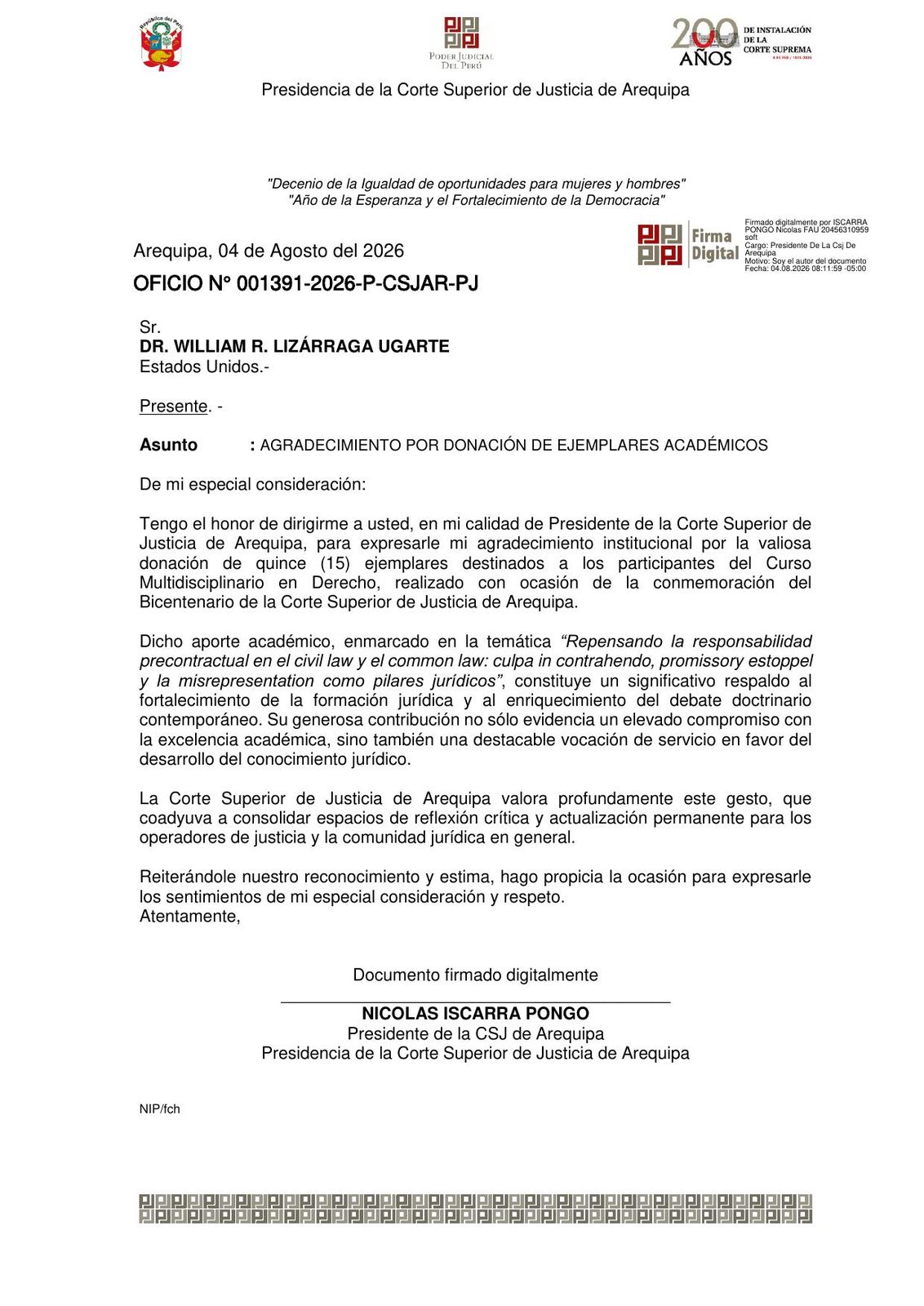 Superior Court of Justice of ArequipaRethinking Precontractual Liability
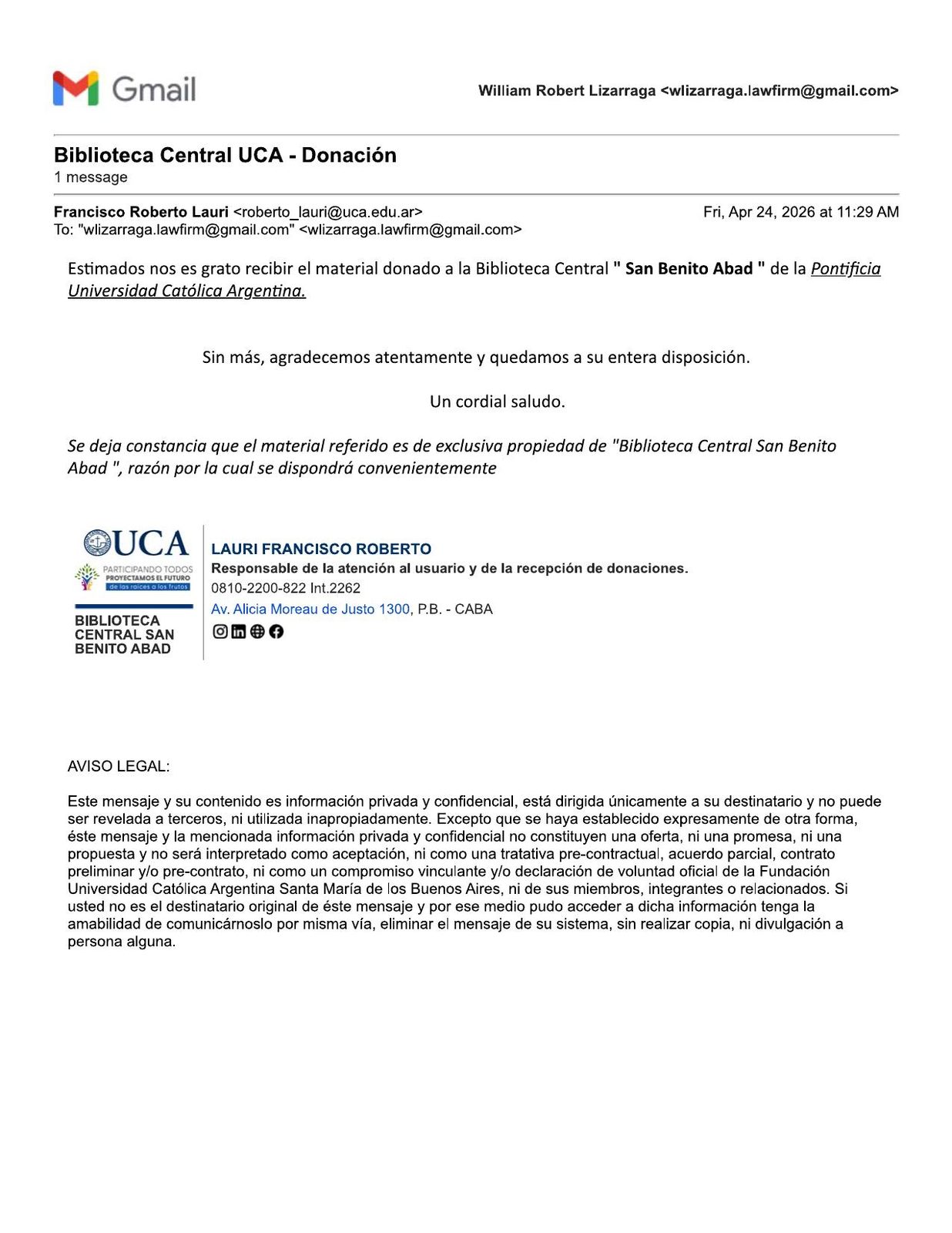 Pontificia Universidad Católica Argentina — Central LibraryRethinking Precontractual Liability
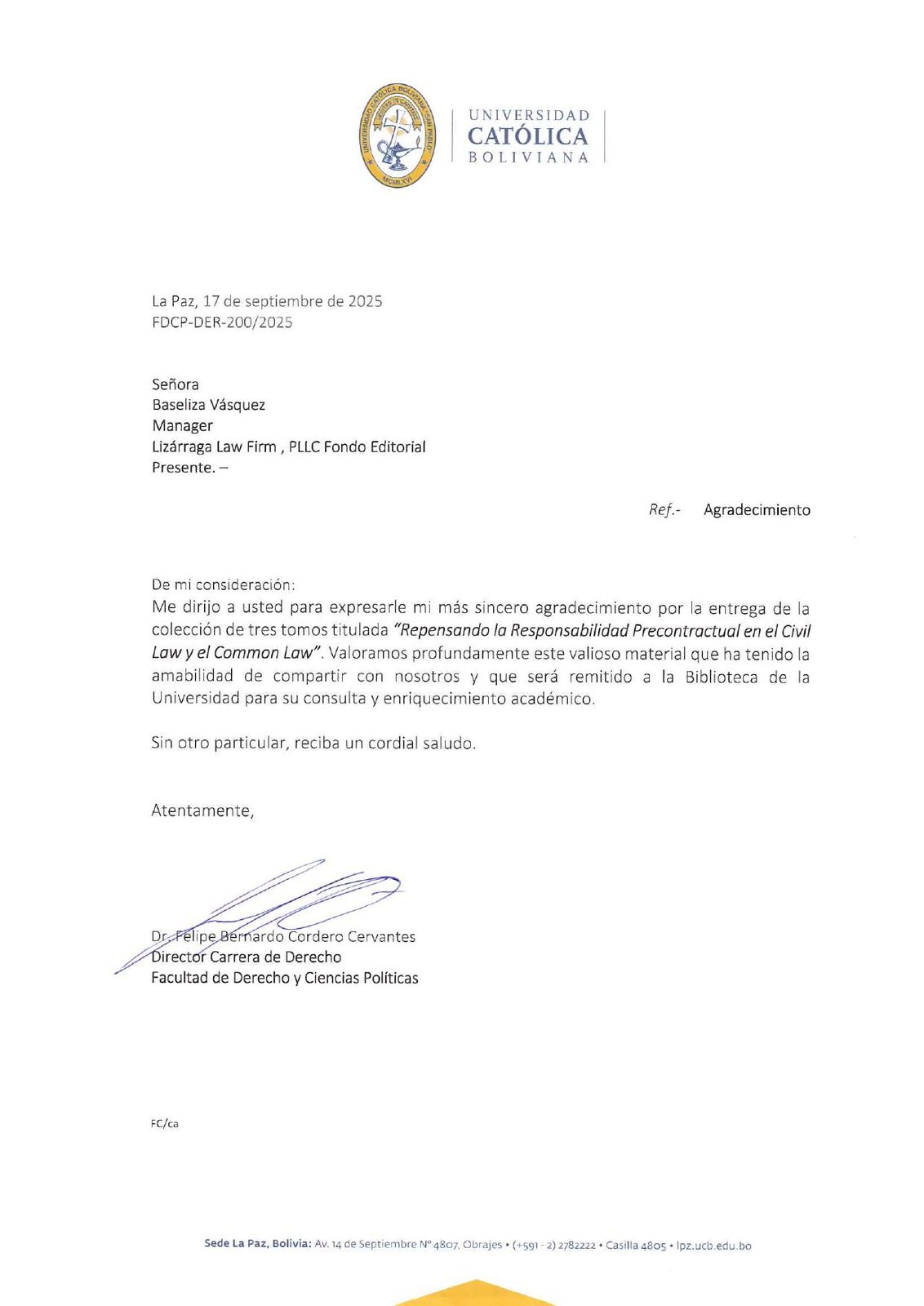 Universidad Católica Boliviana San PabloRethinking Precontractual Liability
 Universidad Católica del Norte (Chile)Rethinking Precontractual Liability
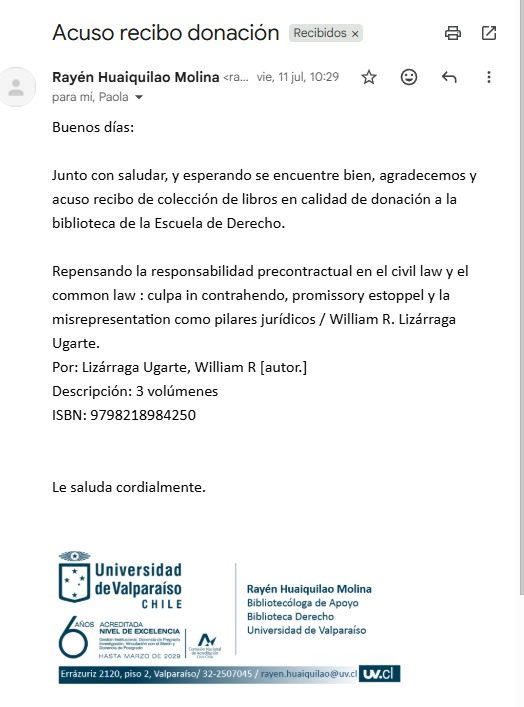 Universidad de Valparaíso (Chile)Rethinking Precontractual Liability
 Universidad Nacional Autónoma de México (UNAM)Rethinking Precontractual Liability
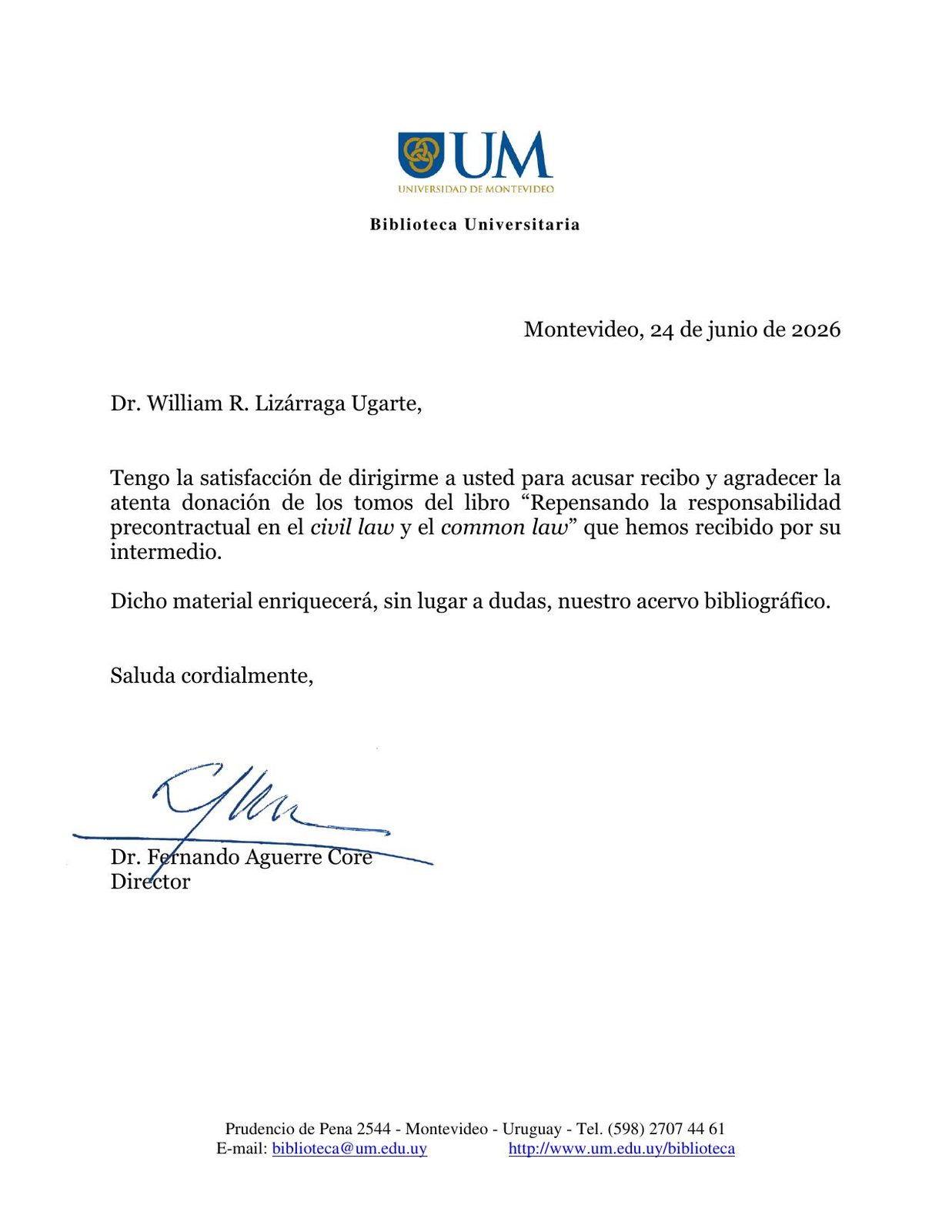 Universidad de MontevideoRethinking Precontractual Liability
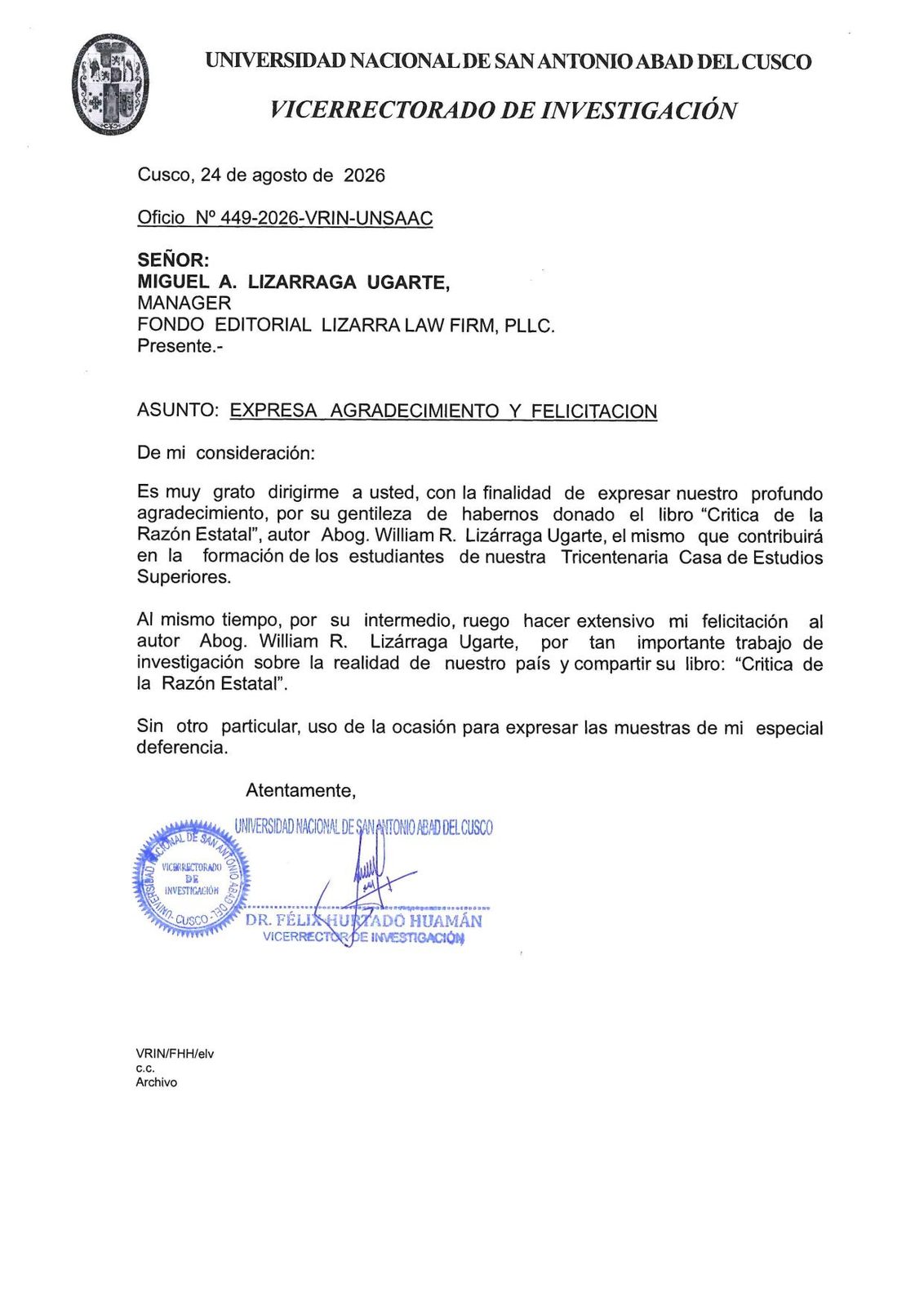 Universidad Nacional de San Antonio Abad del CuscoCrítica de la razón estatal
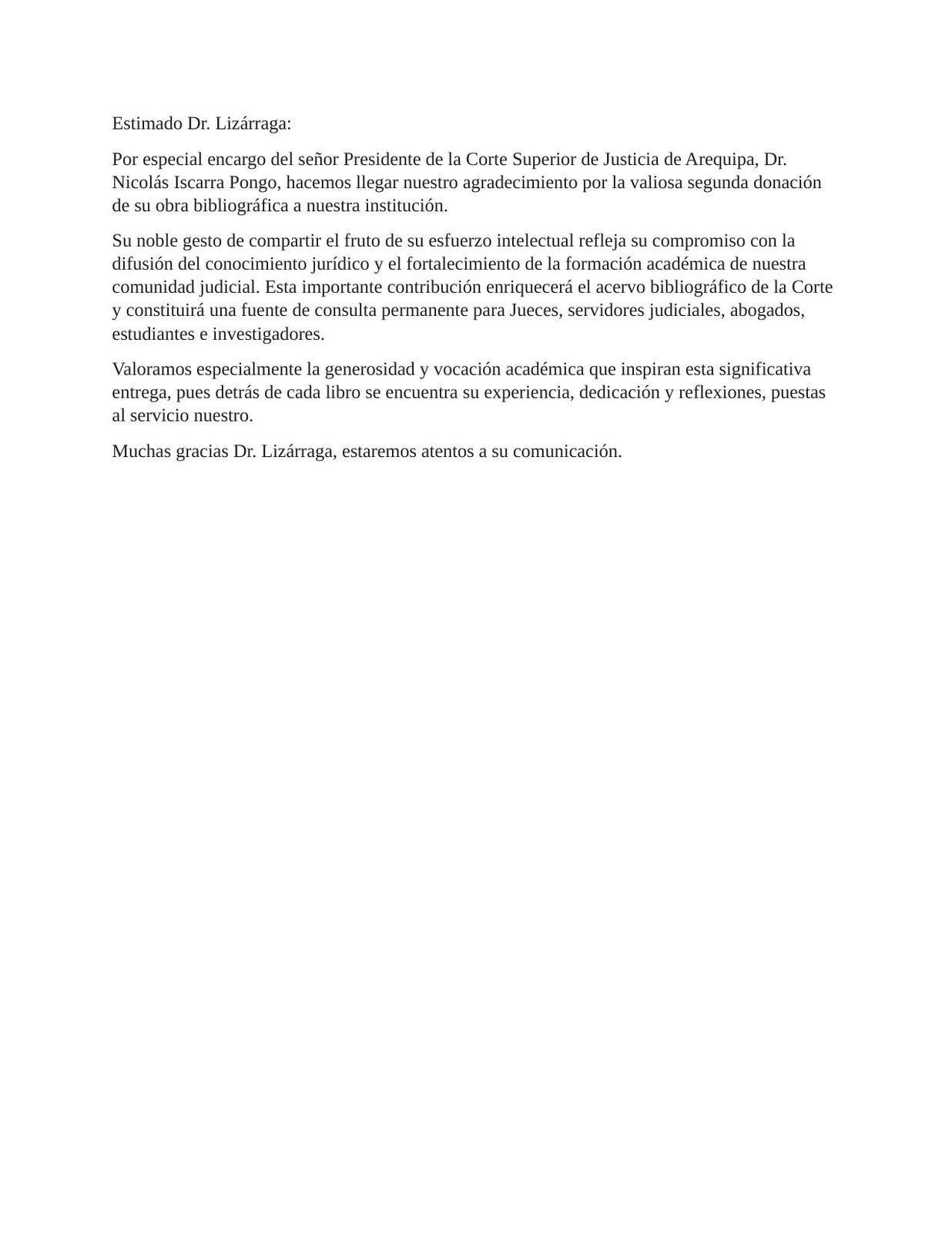 Superior Court of Justice of ArequipaCrítica de la razón estatal
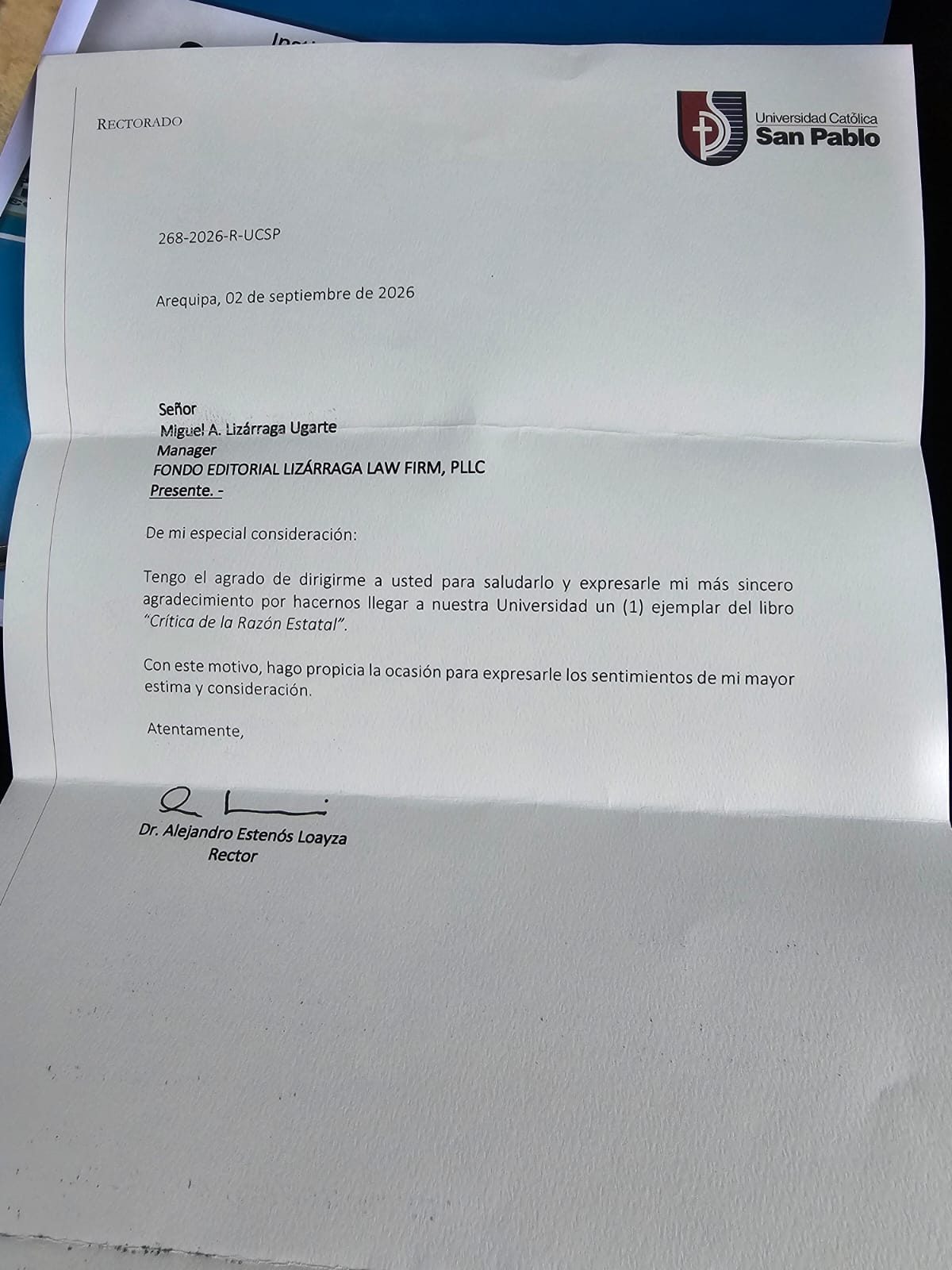 Universidad Católica San Pablo — RectorCrítica de la razón estatal
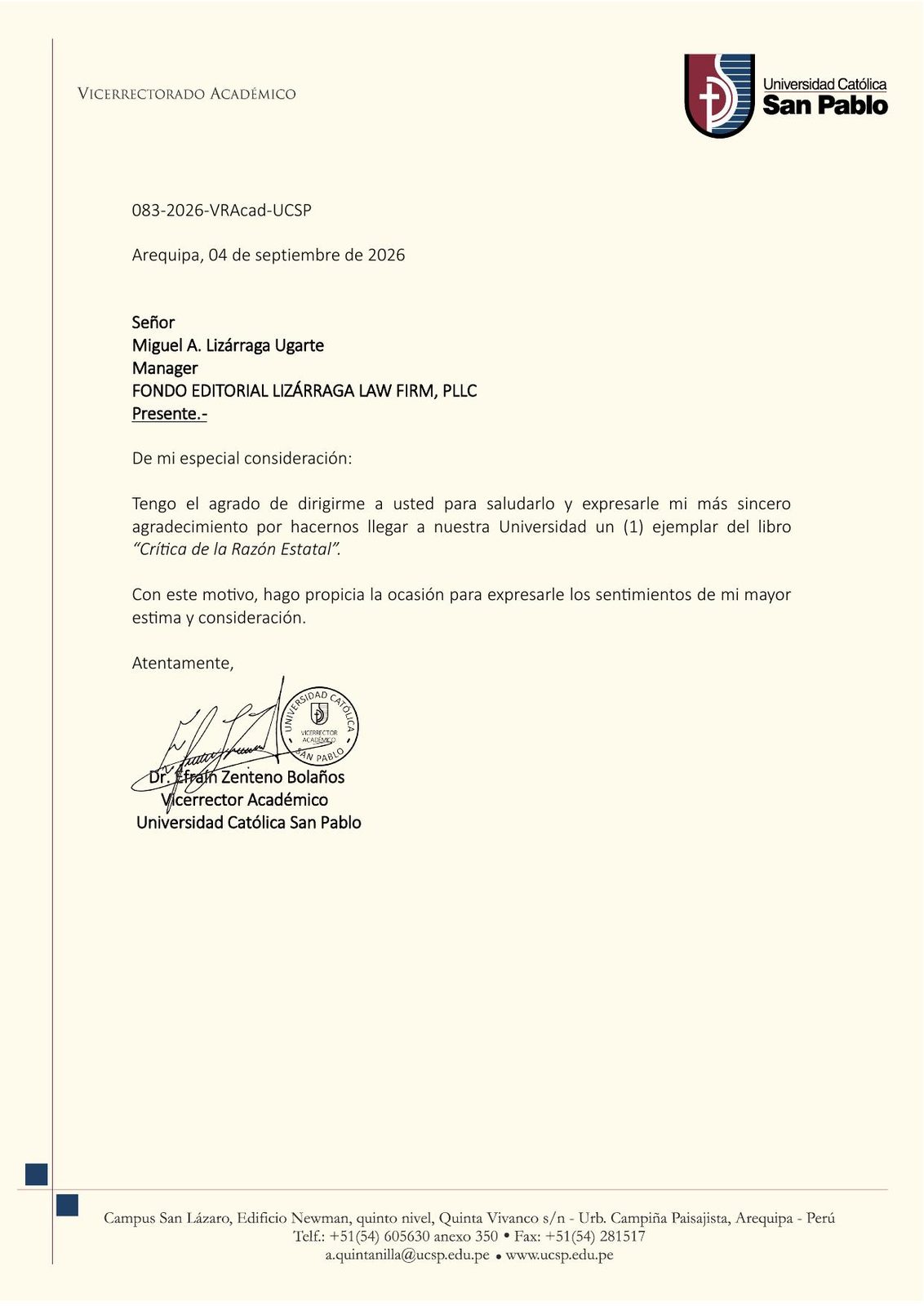 Universidad Católica San PabloCrítica de la razón estatal
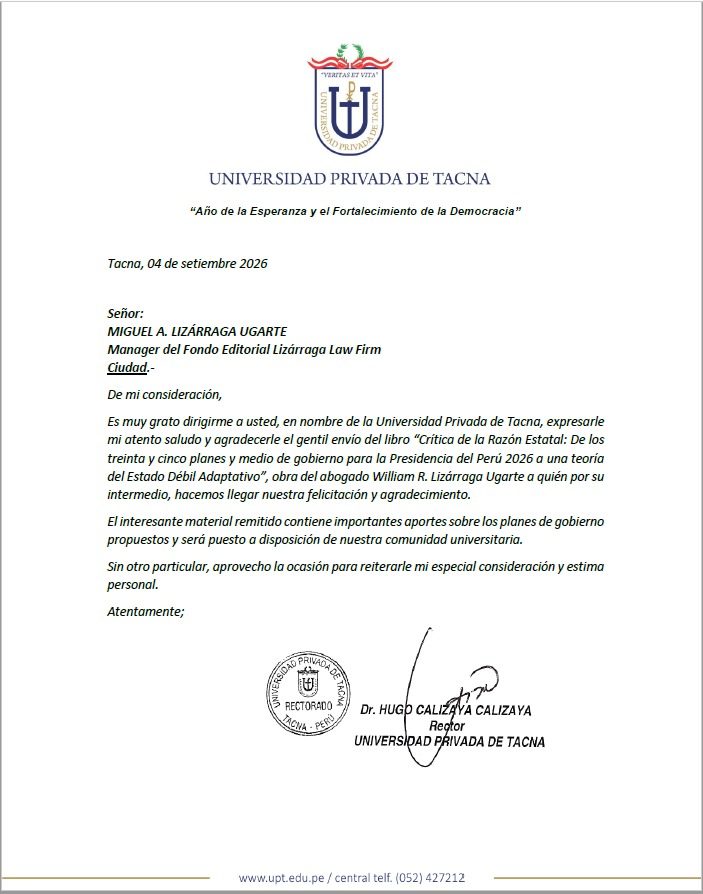 Universidad Privada de TacnaCrítica de la razón estatal
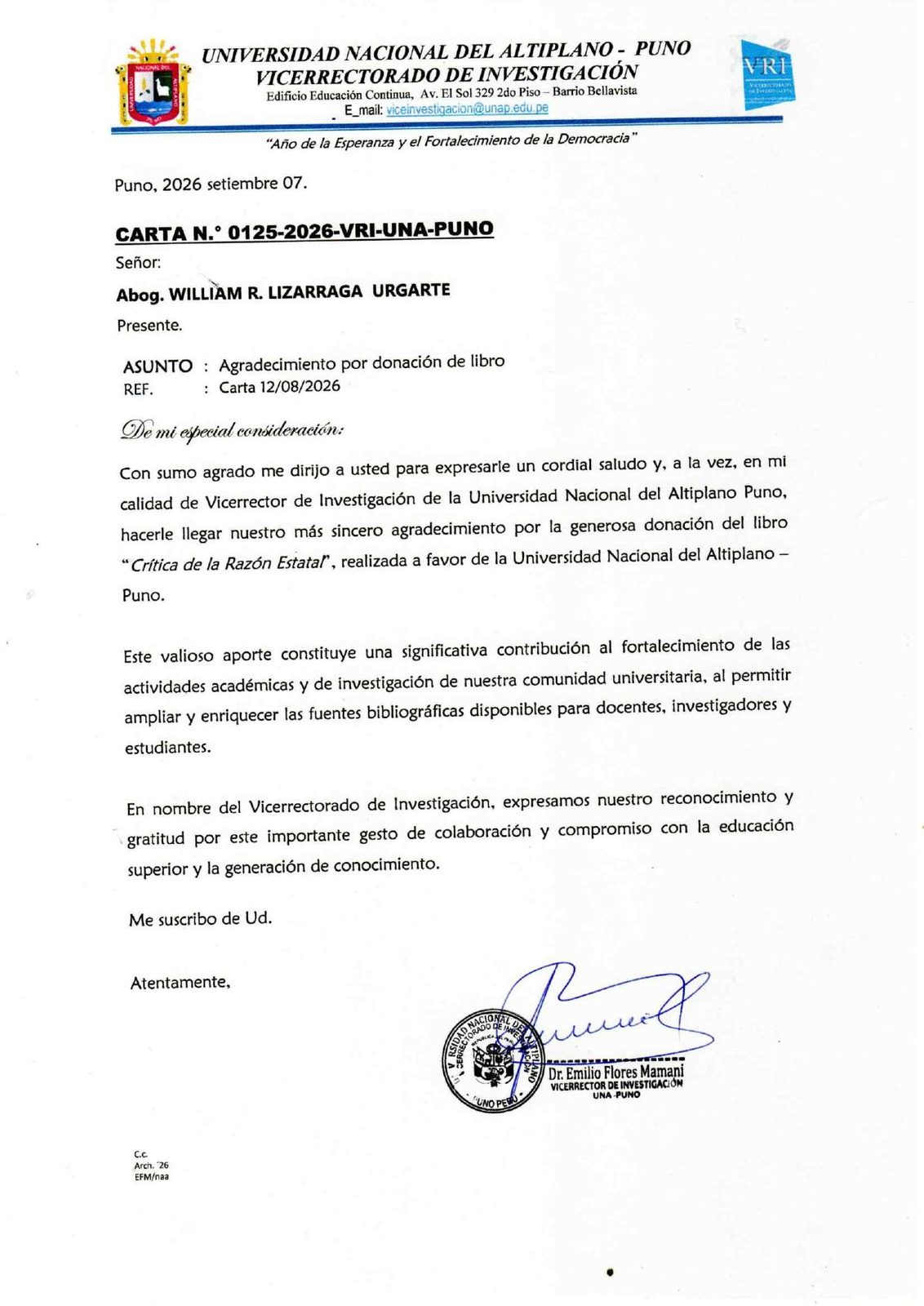 Universidad Nacional del Altiplano (Puno) — Vice-RectorCrítica de la razón estatal
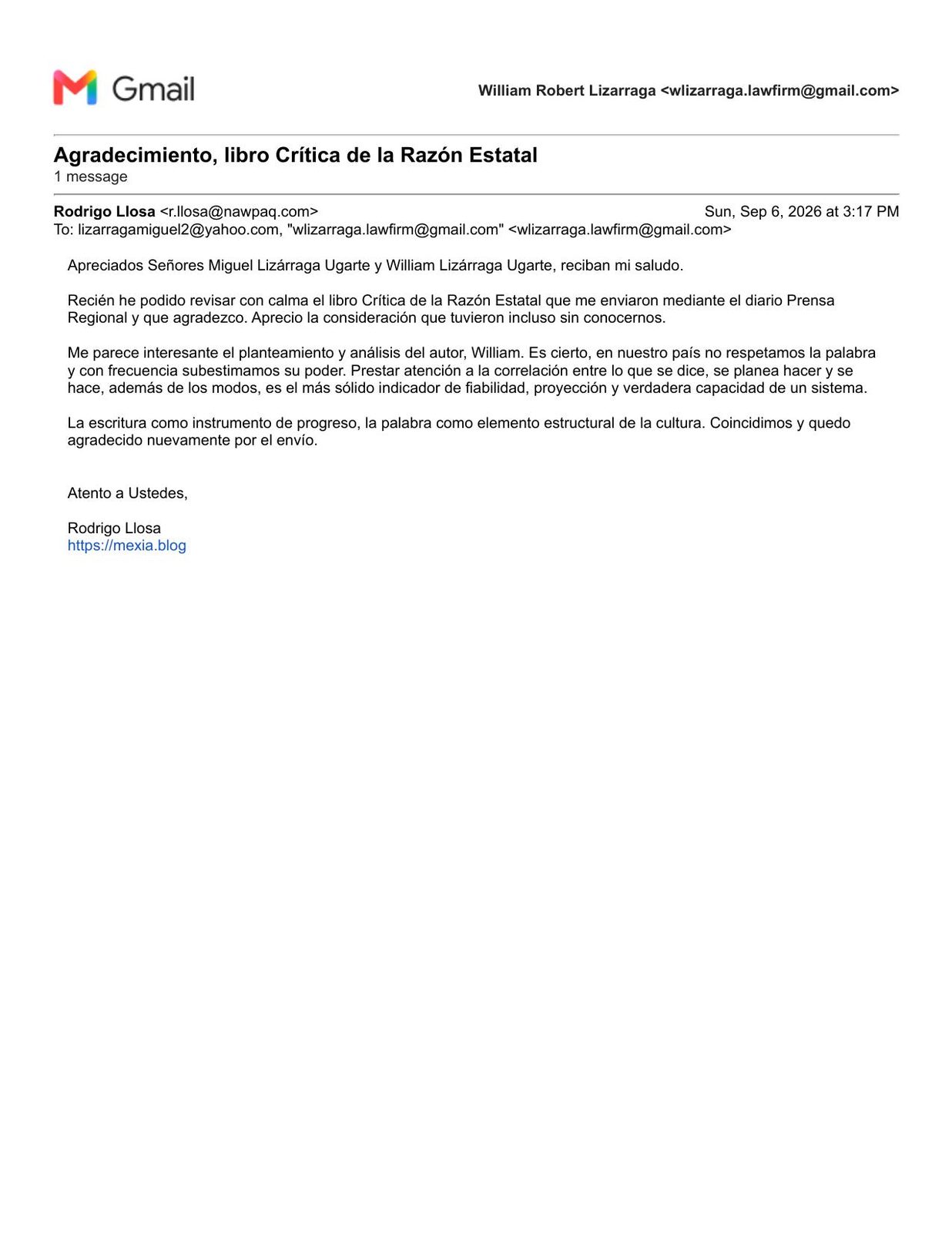 Rodrigo Llosa, journalistCrítica de la razón estatal
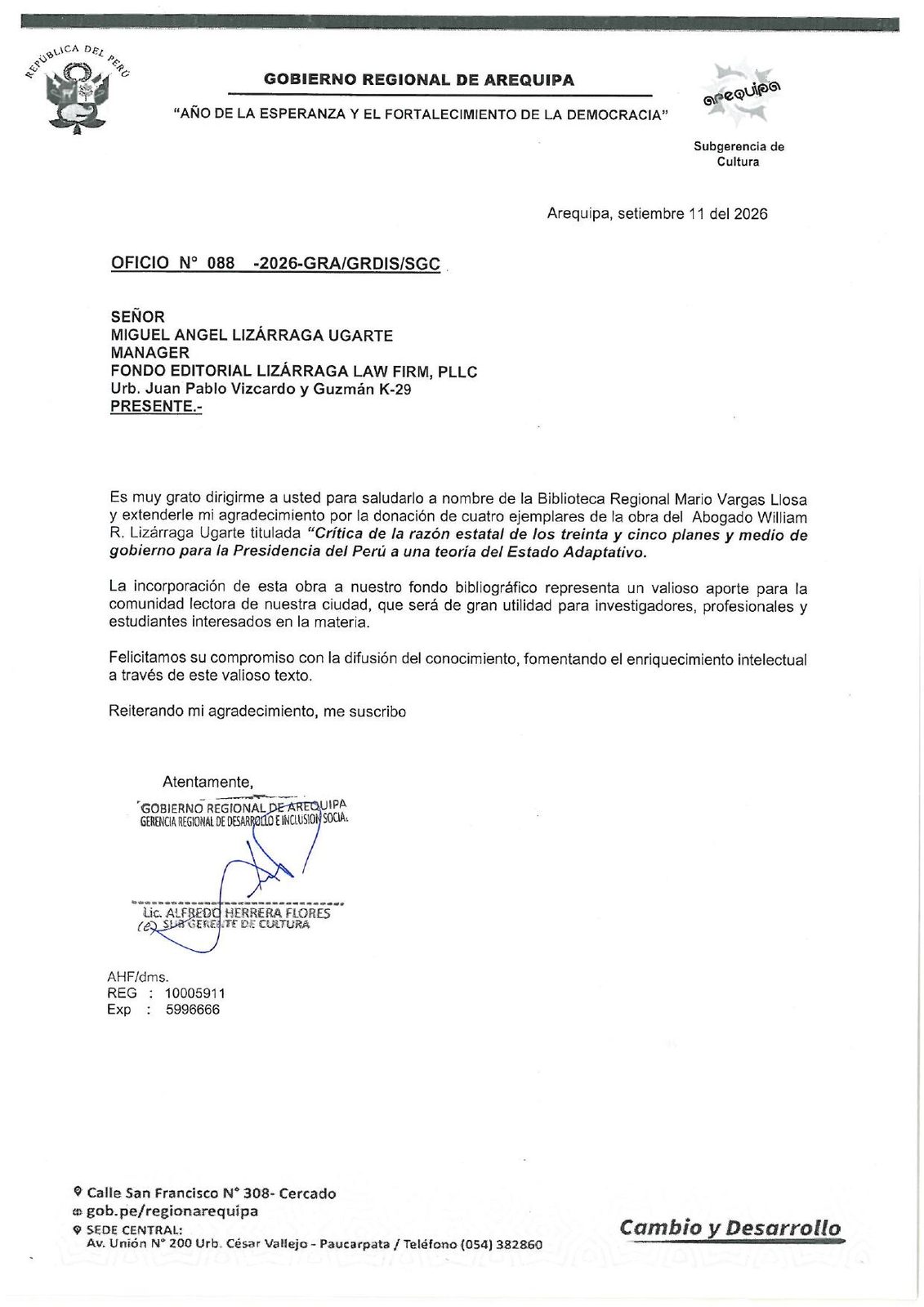 Regional Government of ArequipaCrítica de la razón estatal
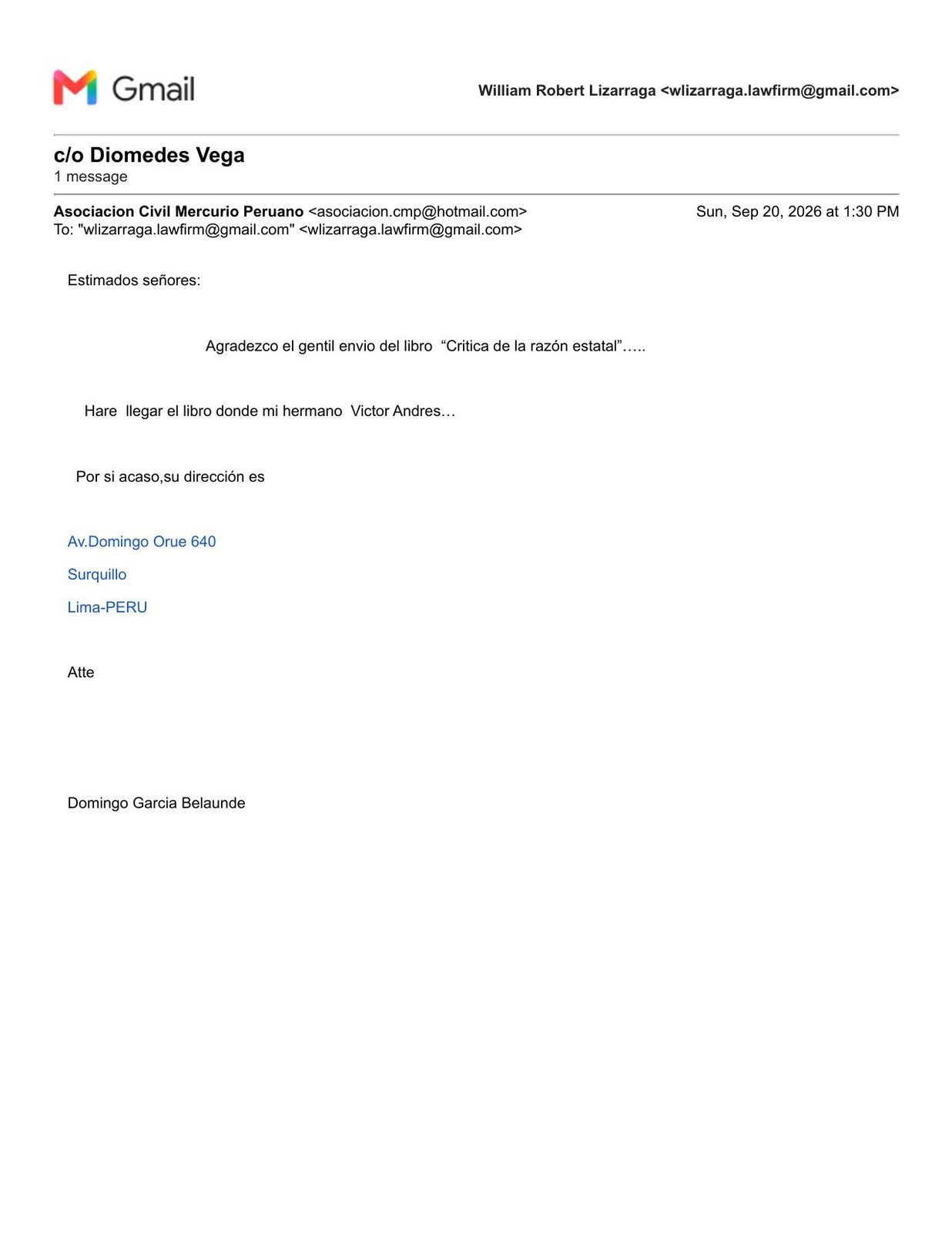 Dr. Domingo García BelaundeCrítica de la razón estatal
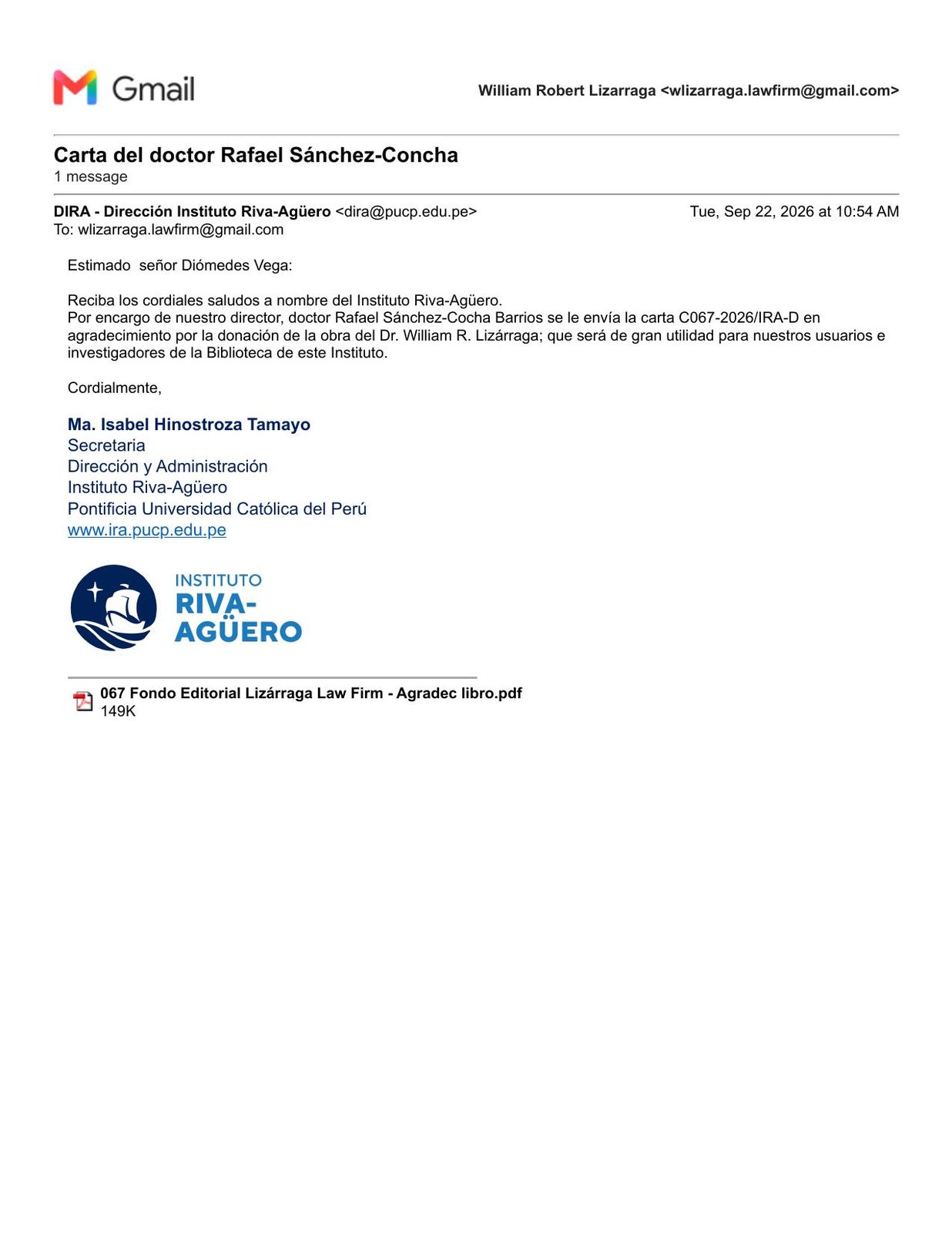 PUCP — Instituto Riva-AgüeroCrítica de la razón estatal
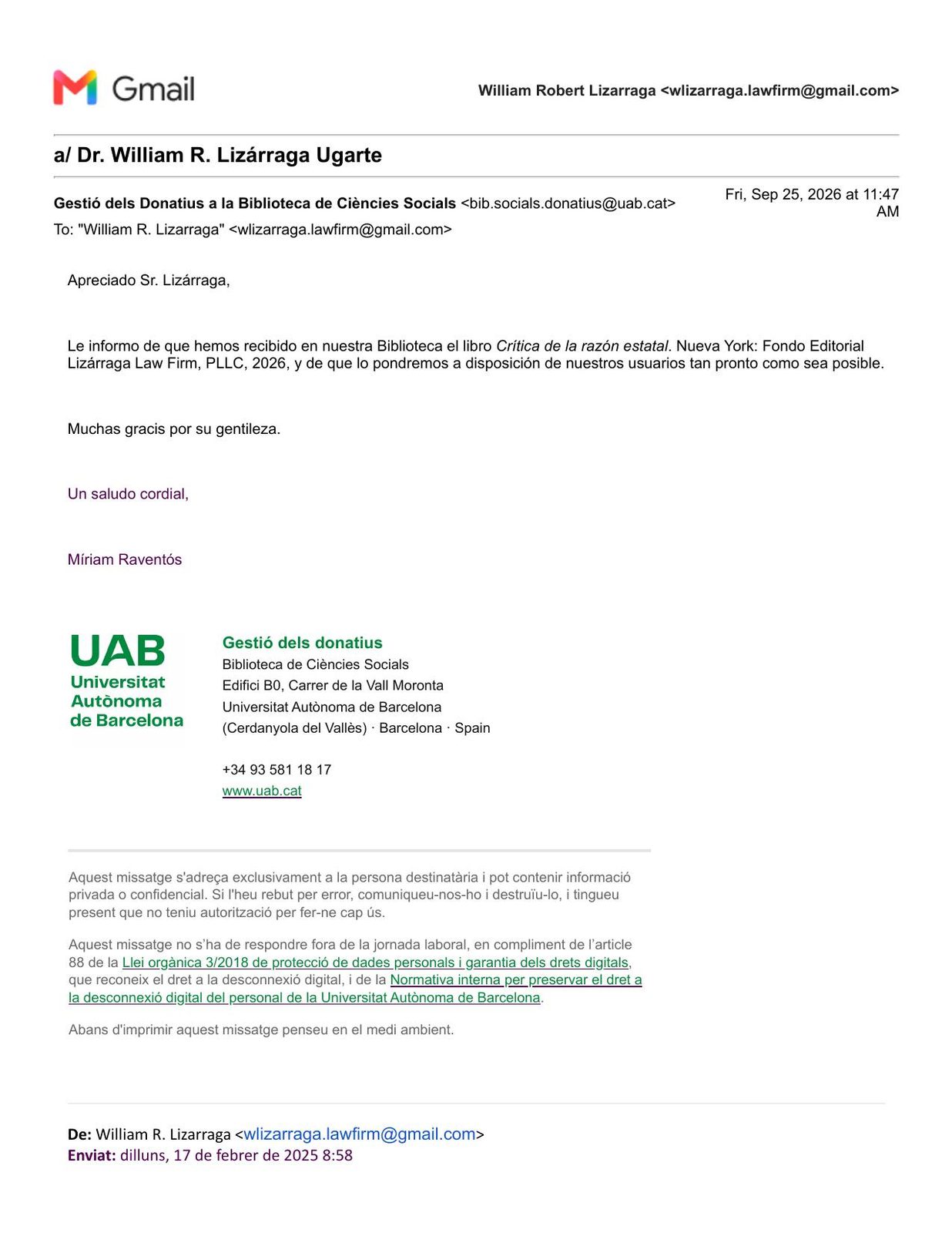 Universitat Autònoma de BarcelonaCrítica de la razón estatal
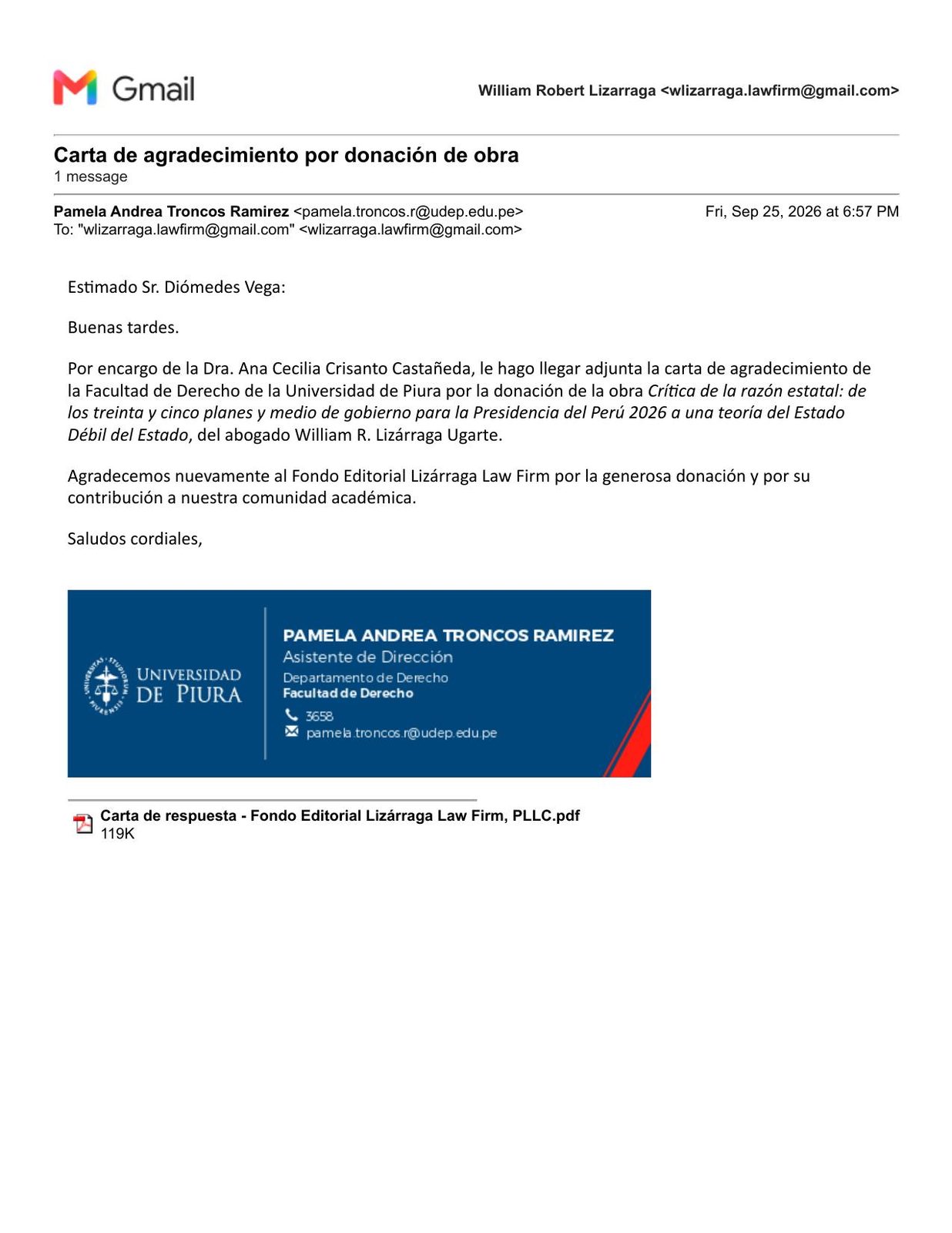 Universidad de PiuraCrítica de la razón estatal
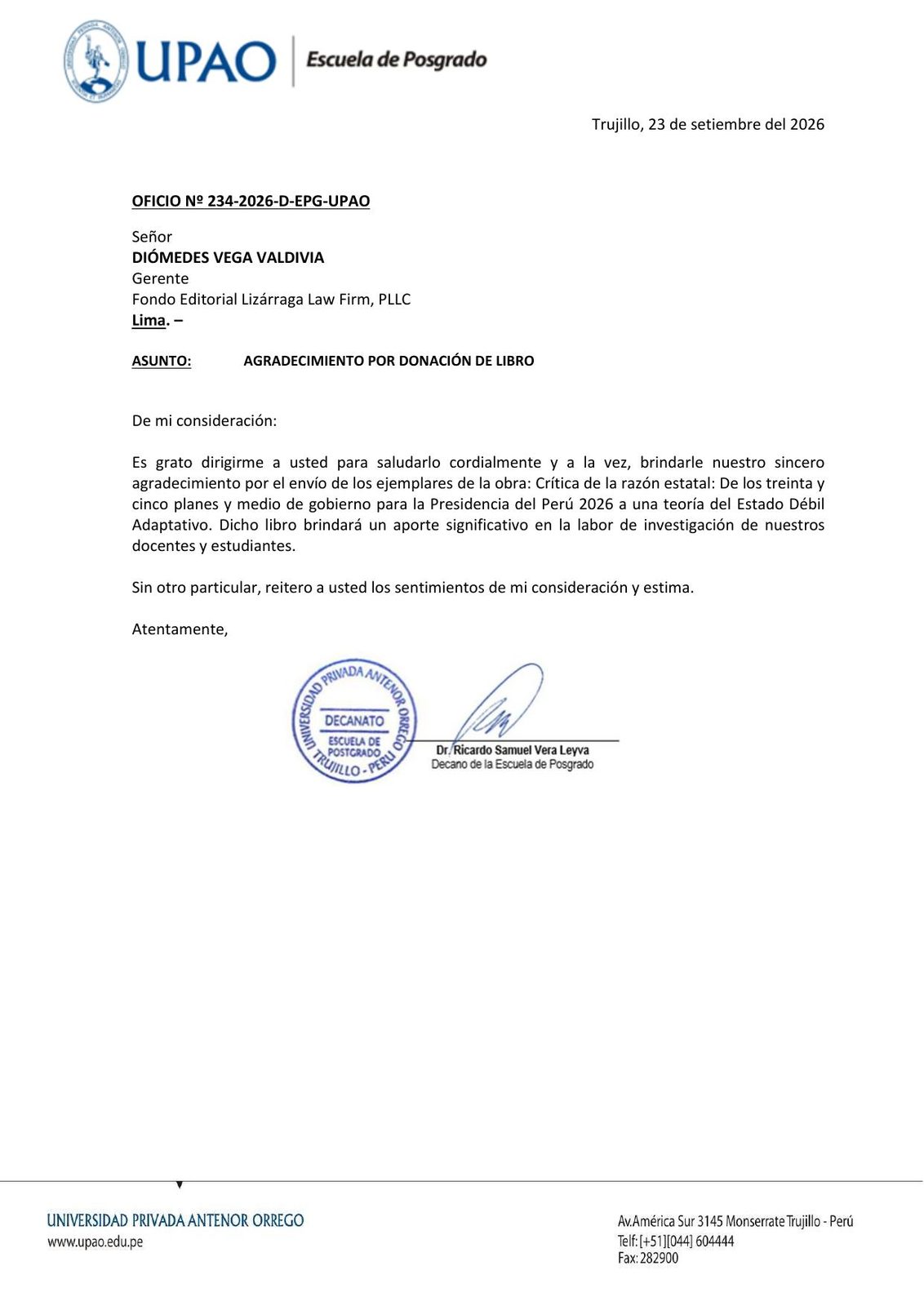 Universidad Privada Antenor Orrego — Graduate SchoolCrítica de la razón estatal
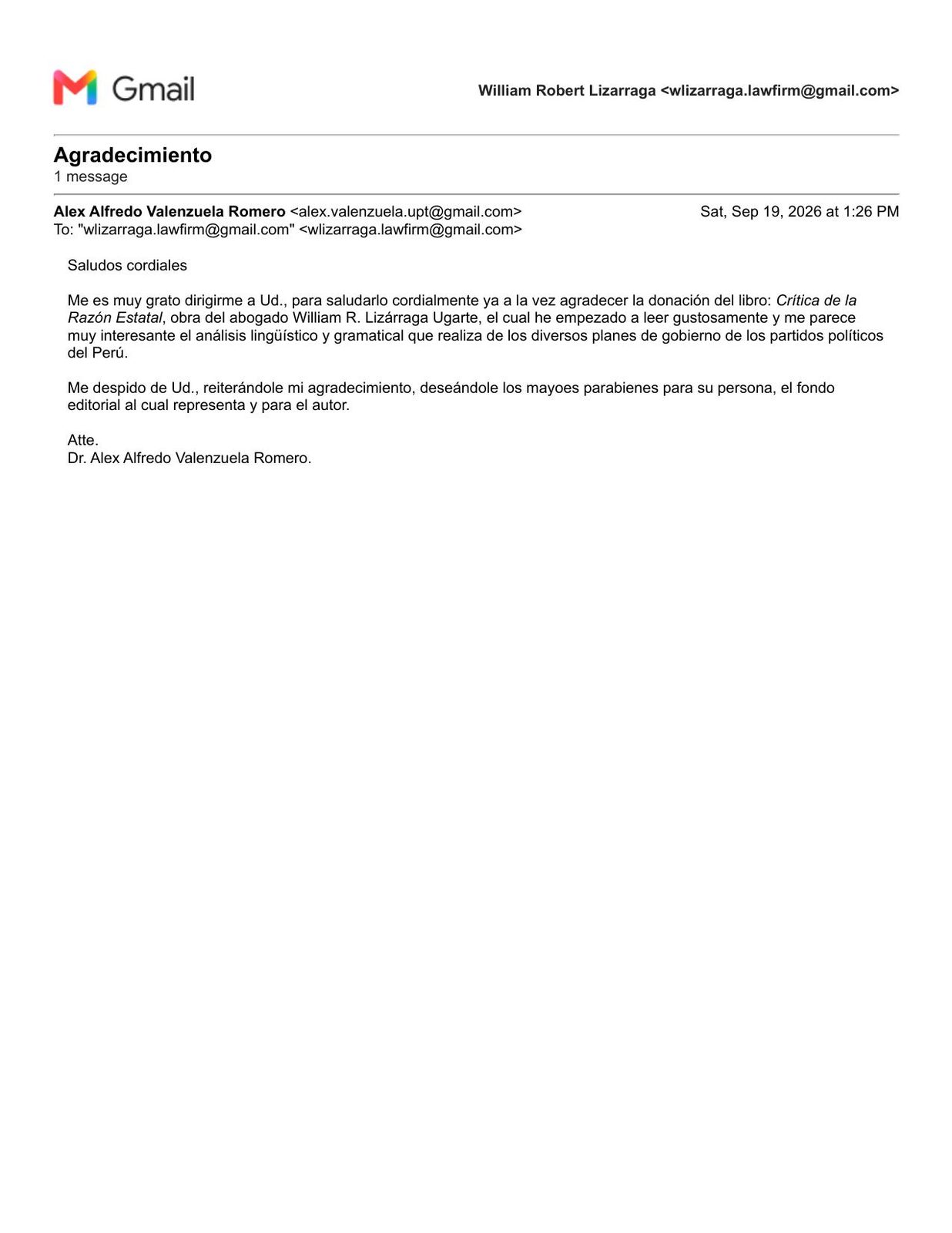 Dr. Alex Alfredo Valenzuela RomeroCrítica de la razón estatal
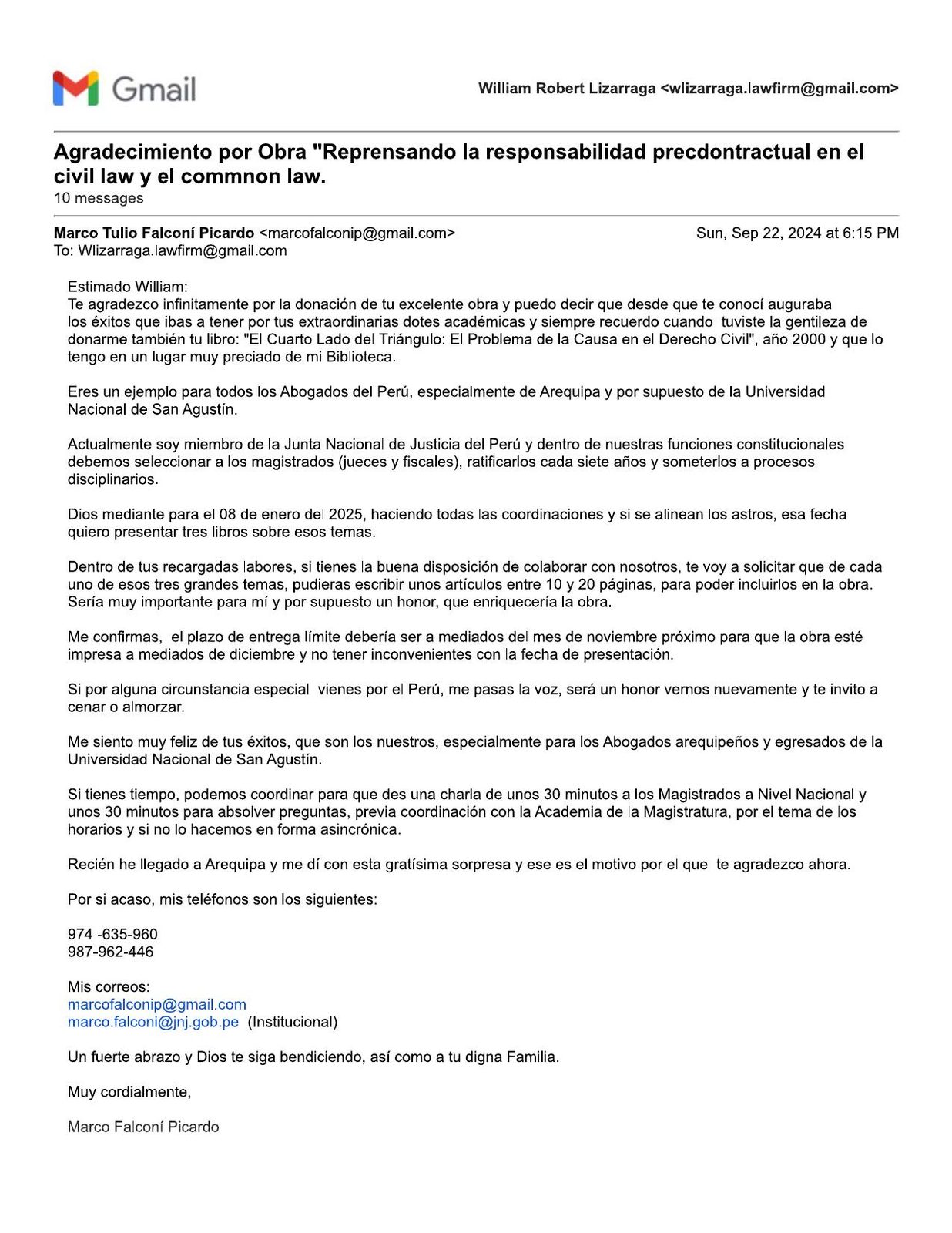 Dr. Marco Falconí PicardoRethinking Precontractual Liability
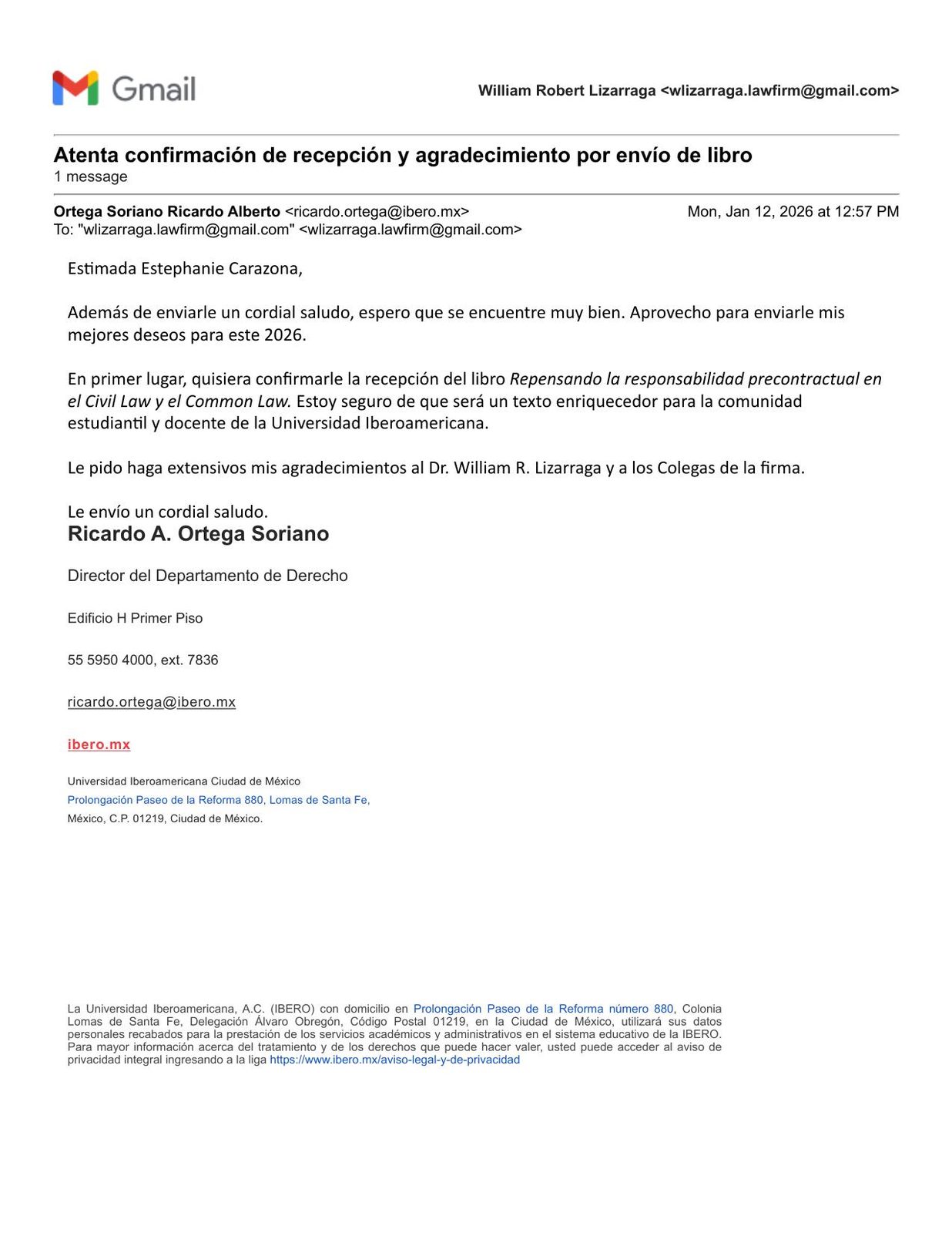 Universidad Iberoamericana, Mexico CityRethinking Precontractual Liability
 Library of the Supreme Court of Justice of UruguayRethinking Precontractual Liability
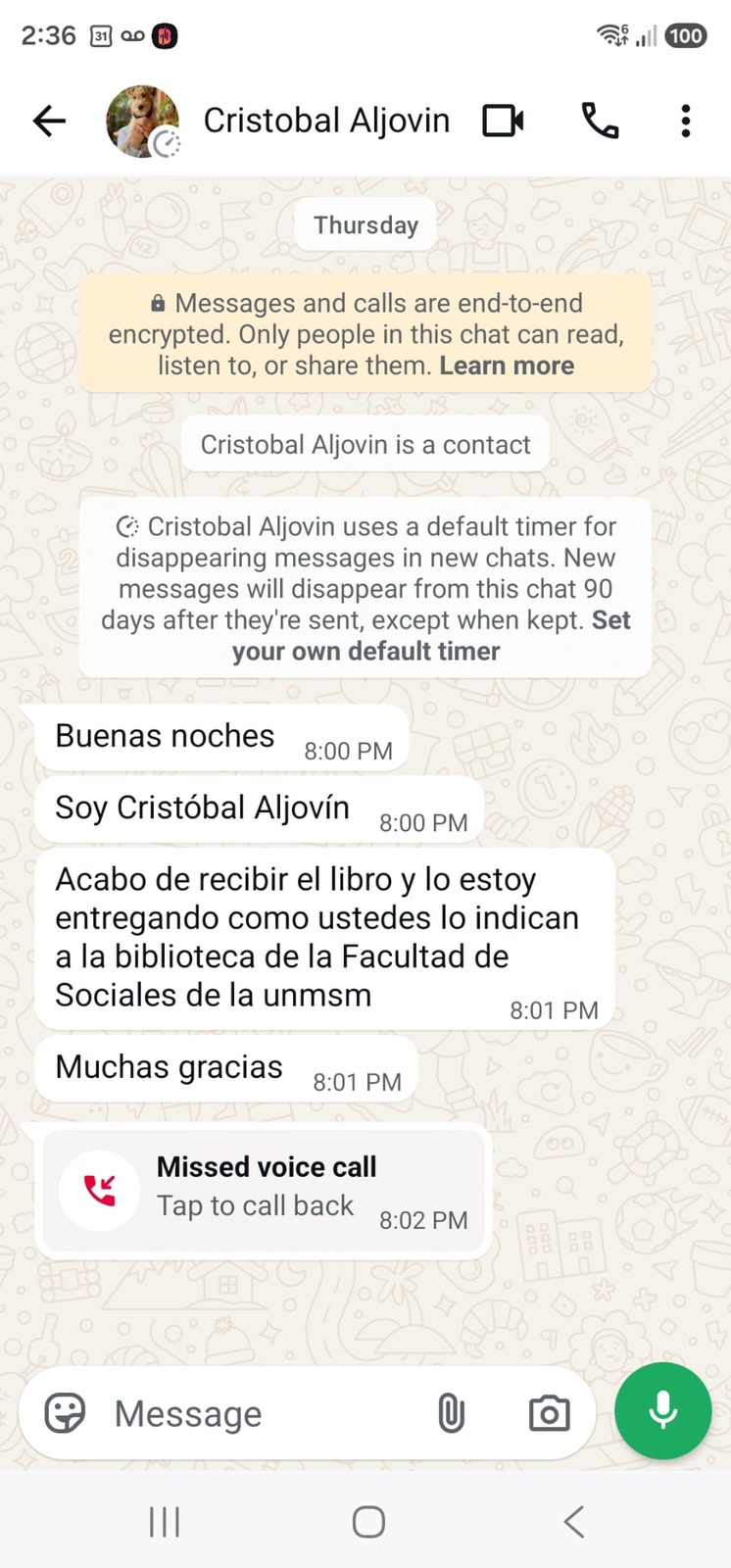 Dr. Cristóbal Aljovín (Universidad Nacional Mayor de San Marcos)Crítica de la razón estatal
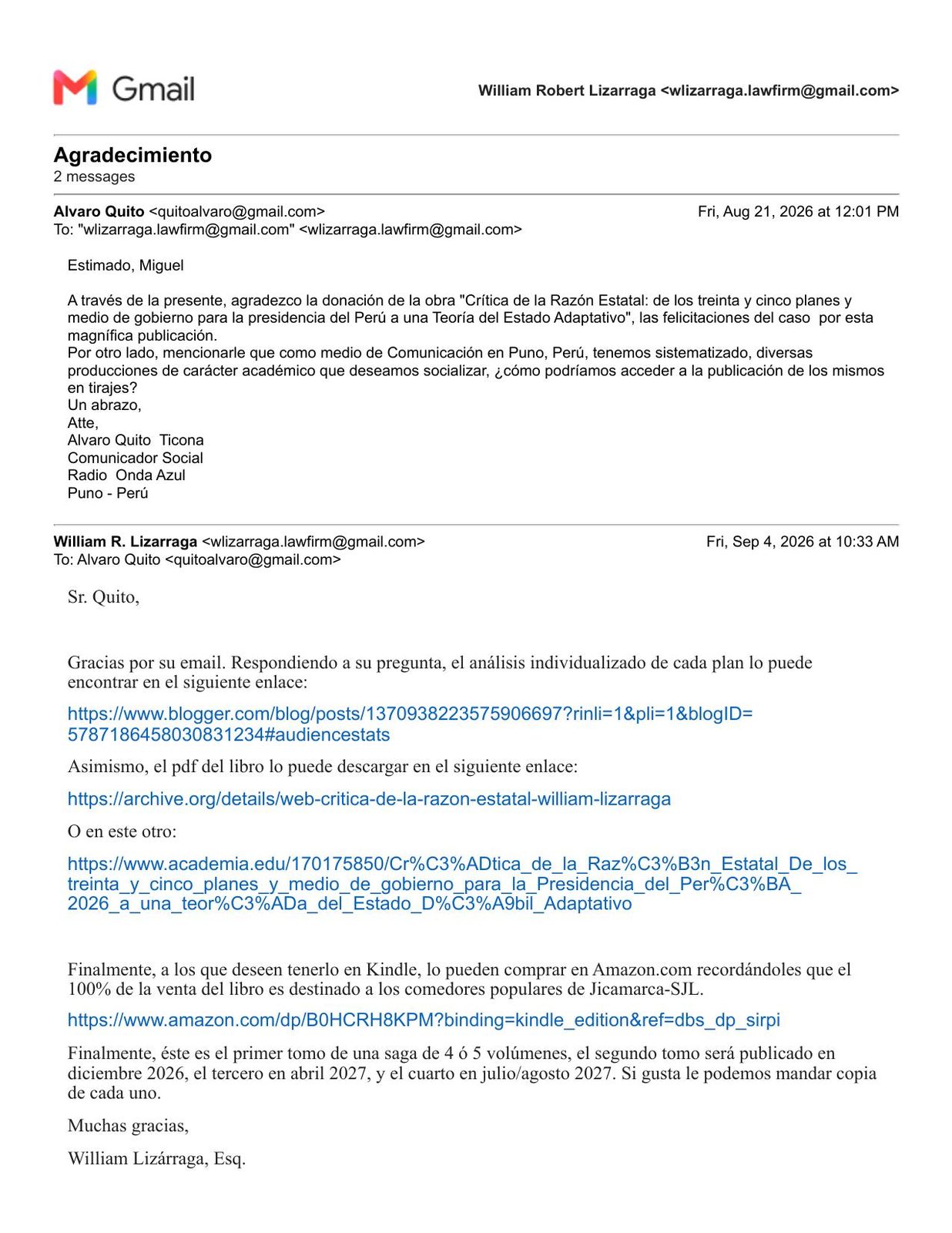 Álvaro Quito (Puno)Crítica de la razón estatal
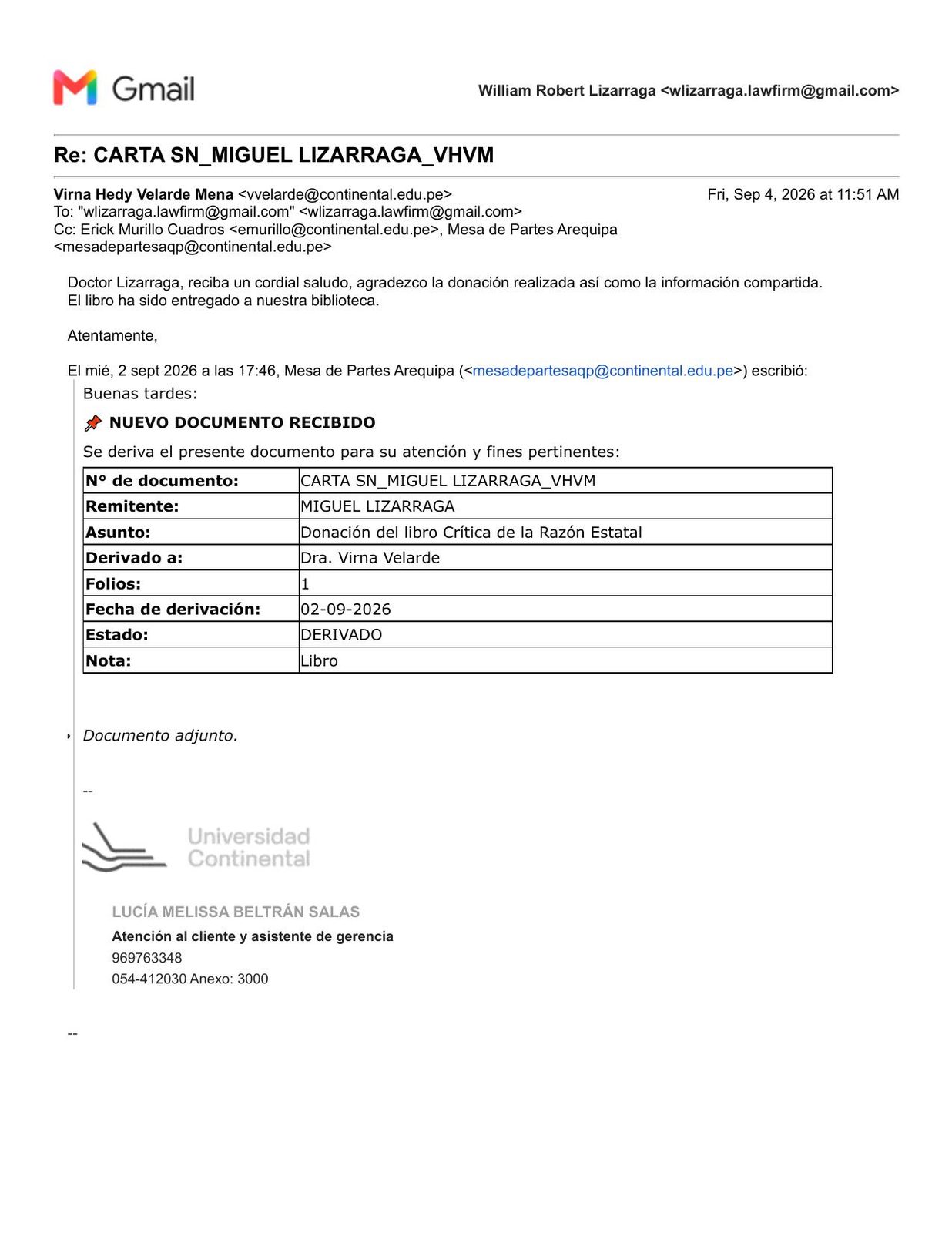 Universidad ContinentalCrítica de la razón estatal
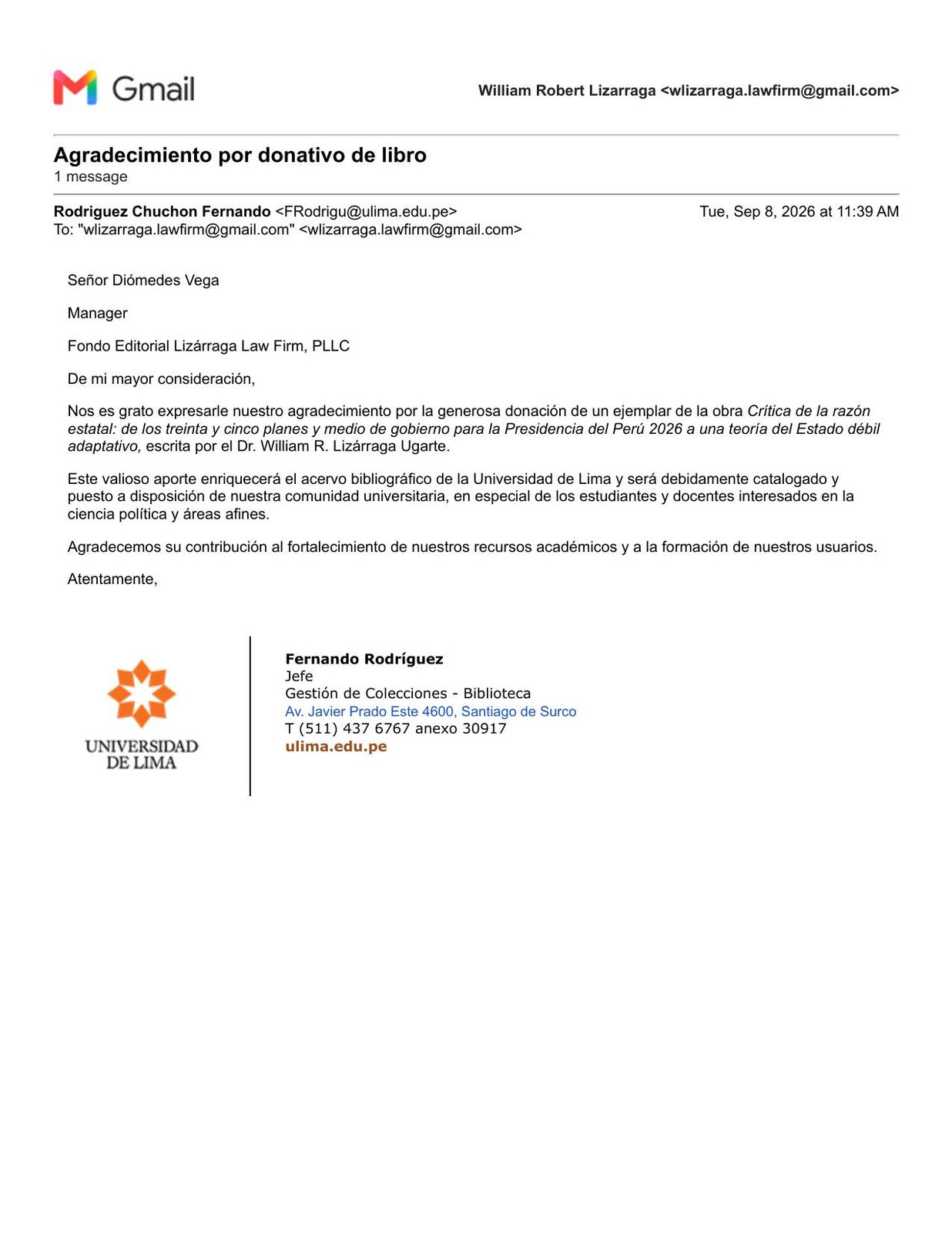 Universidad de LimaCrítica de la razón estatal
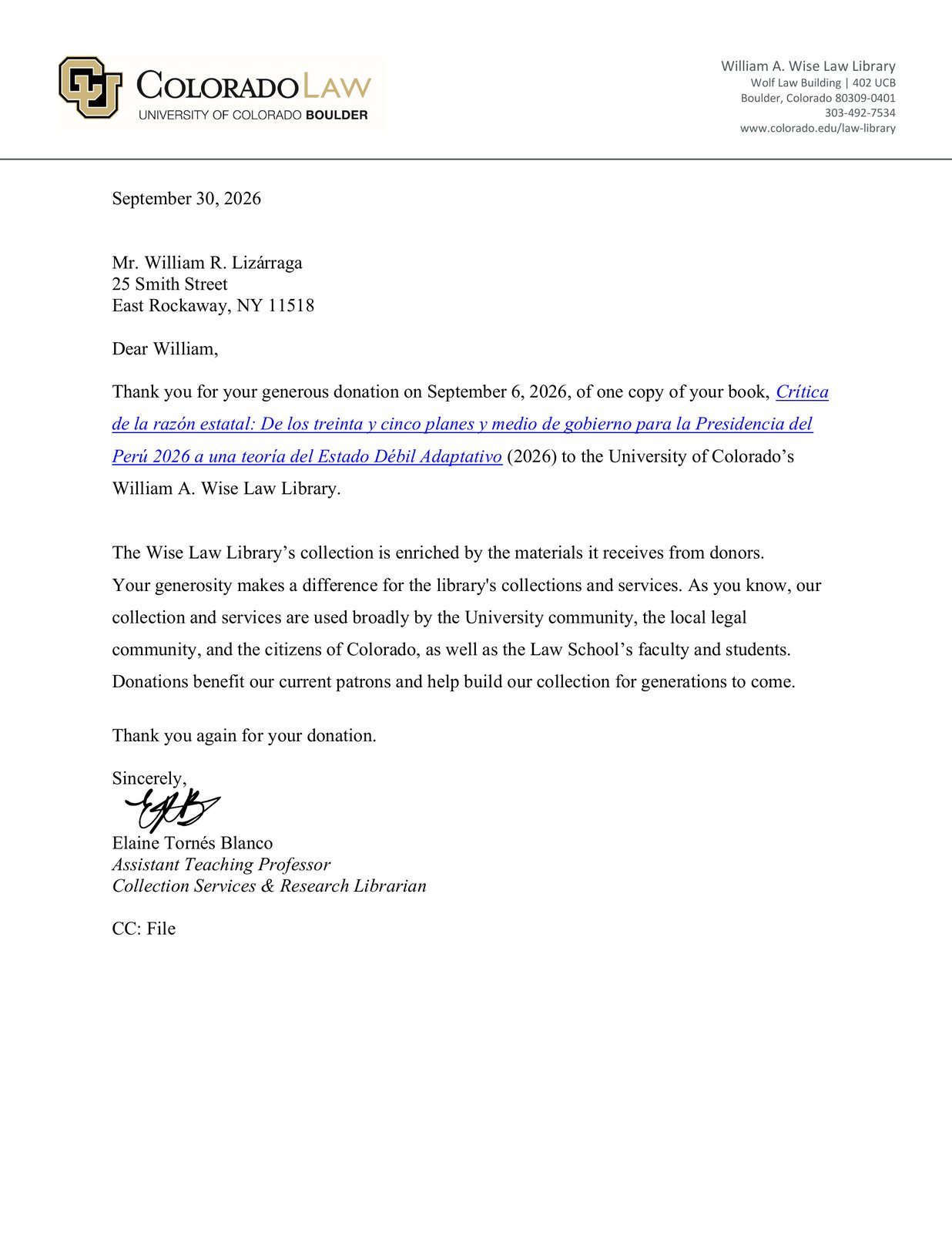 University of Colorado Boulder — William A. Wise Law LibraryCrítica de la razón estatal